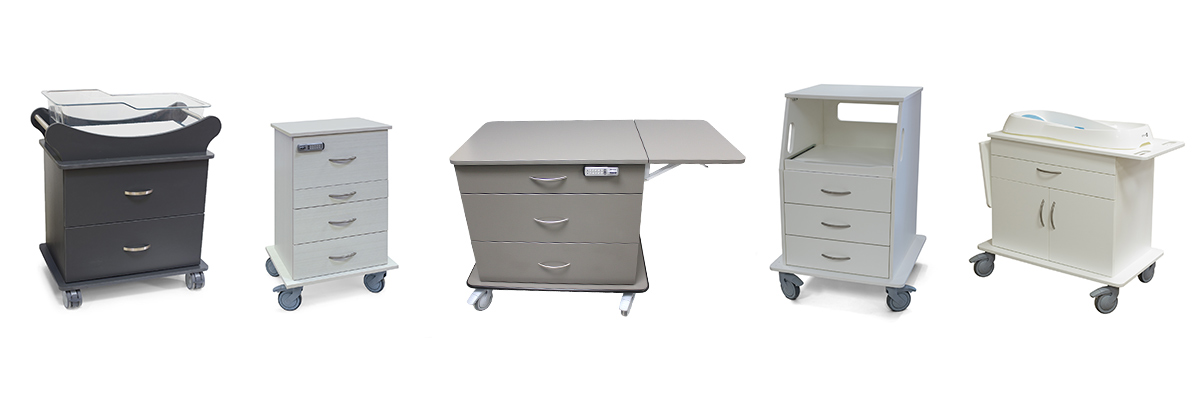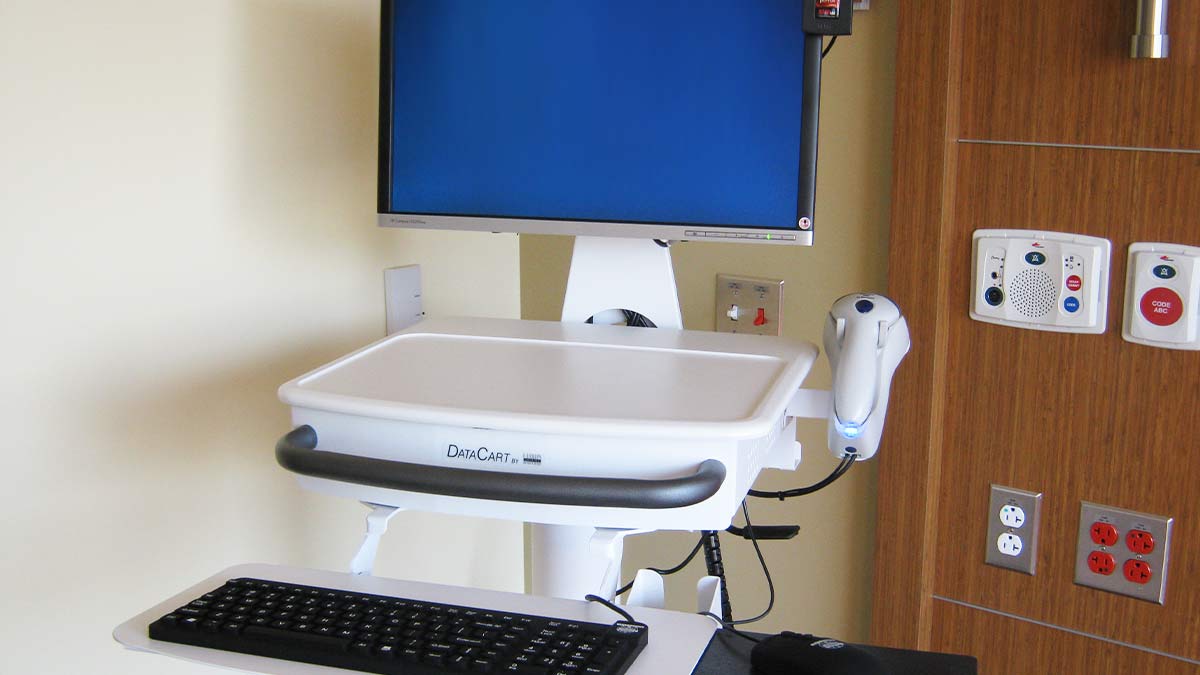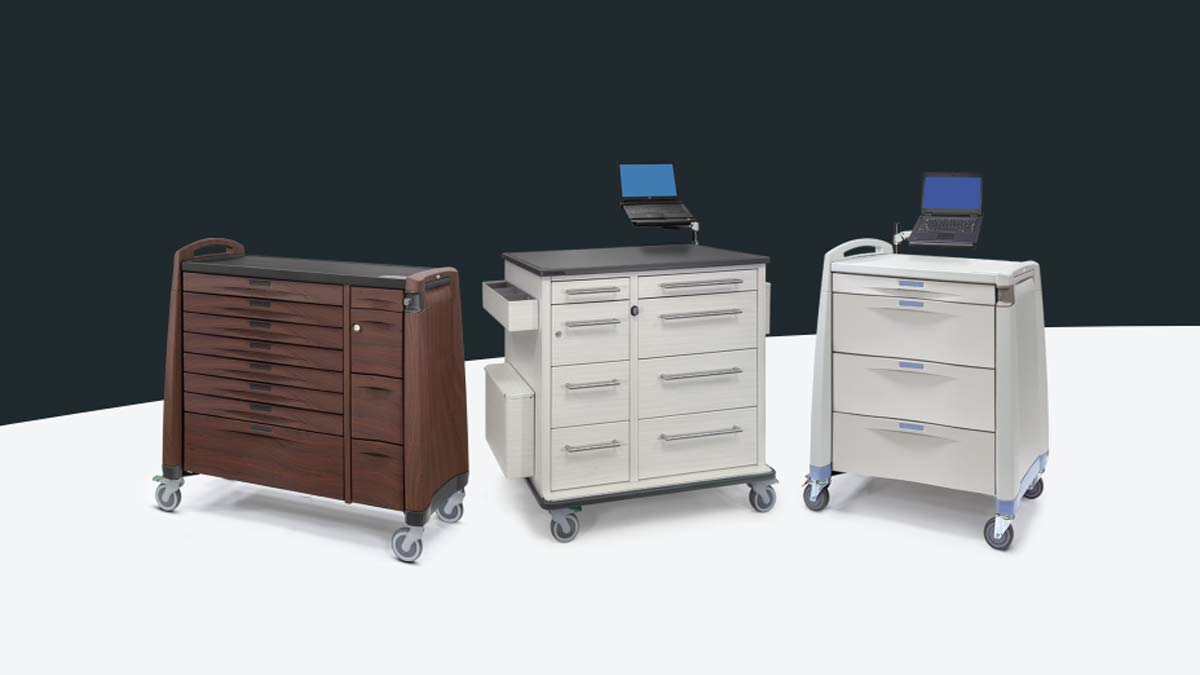
Healthcare Insights

Washable Keyboards and Mice for Healthcare

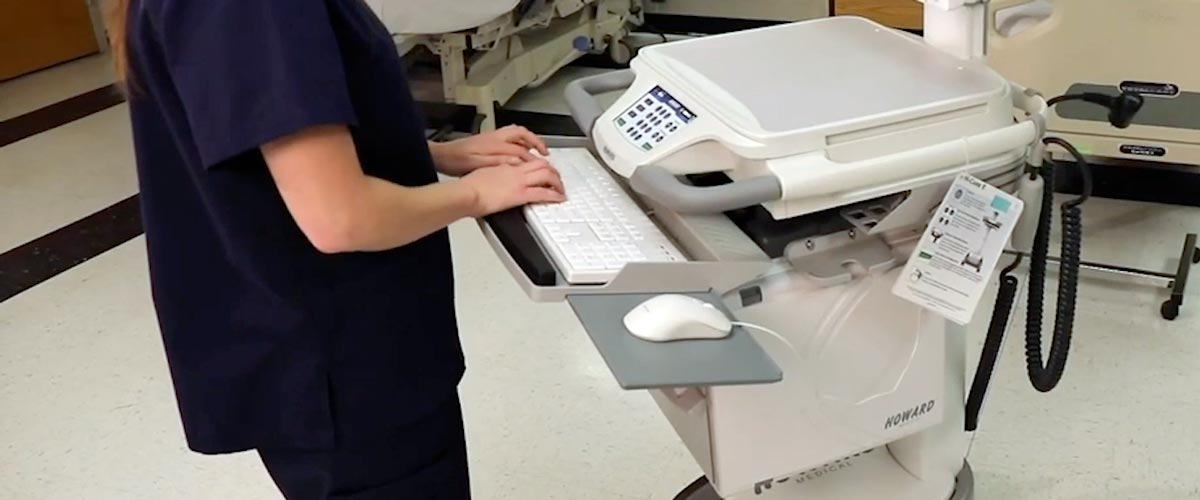
Keyboards and mice are among the most frequently touched pieces of technology in a healthcare environment. Research has found that computer peripherals used in clinical settings are frequently contaminated with microorganisms, including potential pathogens, making cleanability an important consideration when selecting equipment for patient rooms, nursing stations, medical carts, registration areas, and other shared workspaces.

Washable and waterproof keyboards and mice are designed to support frequent cleaning and disinfection while still providing the same functionality clinicians need for documentation, navigation, and everyday computer use.

The right option depends on the workstation, cleaning requirements, available space, and how the device will be used throughout the day.


1. Why Cleanable Keyboards and Mice Matter in Healthcare

Traditional office keyboards and mice get dirty, quick. They include seams, moving parts, and spaces around keys that make routine cleaning more difficult.

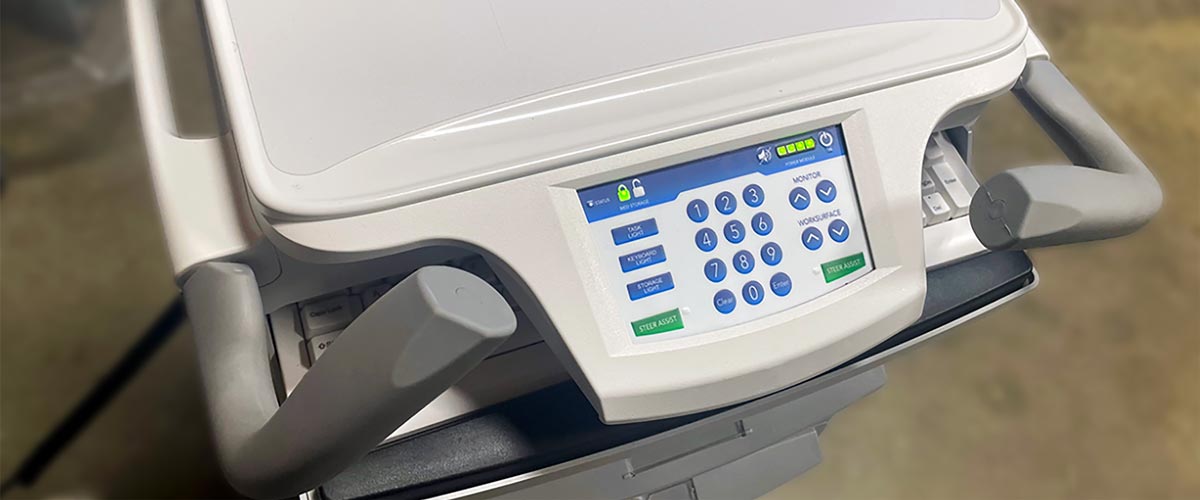
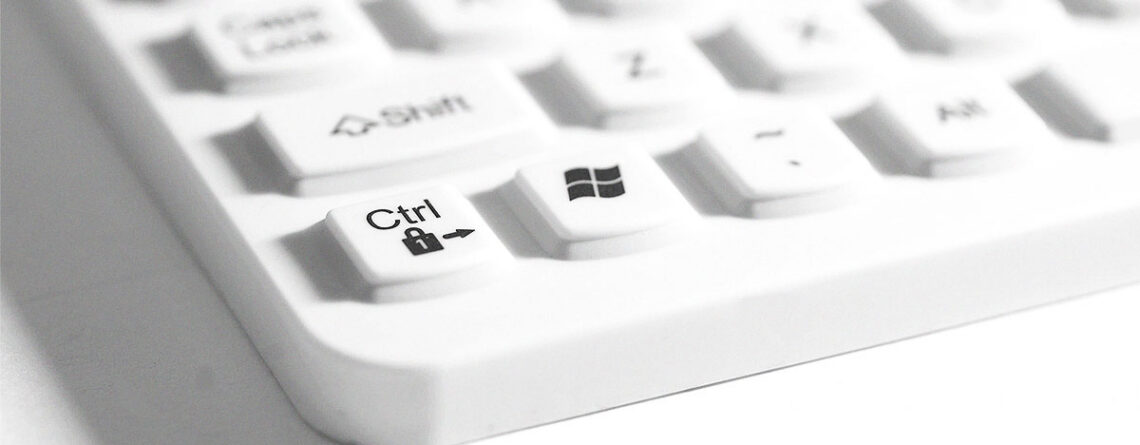
Washable and waterproof peripherals are designed specifically for environments where equipment needs to be cleaned and disinfected regularly. Depending on the model, they may offer sealed construction, washable housings, low-profile surfaces, or keyboard-lock functions that make cleaning easier while the device remains at the workstation.

They are commonly used in:

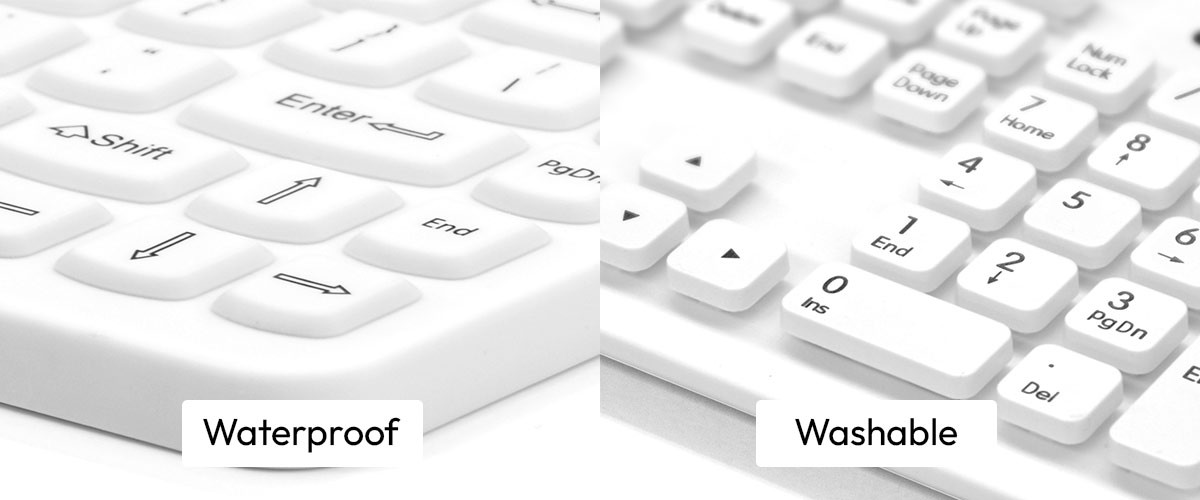
Waterproof and washable white keyboards

2. Washable vs. Waterproof Keyboards and Mice

Washable and waterproof peripherals are both designed for clinical use, but they offer different levels of protection and different user experiences.
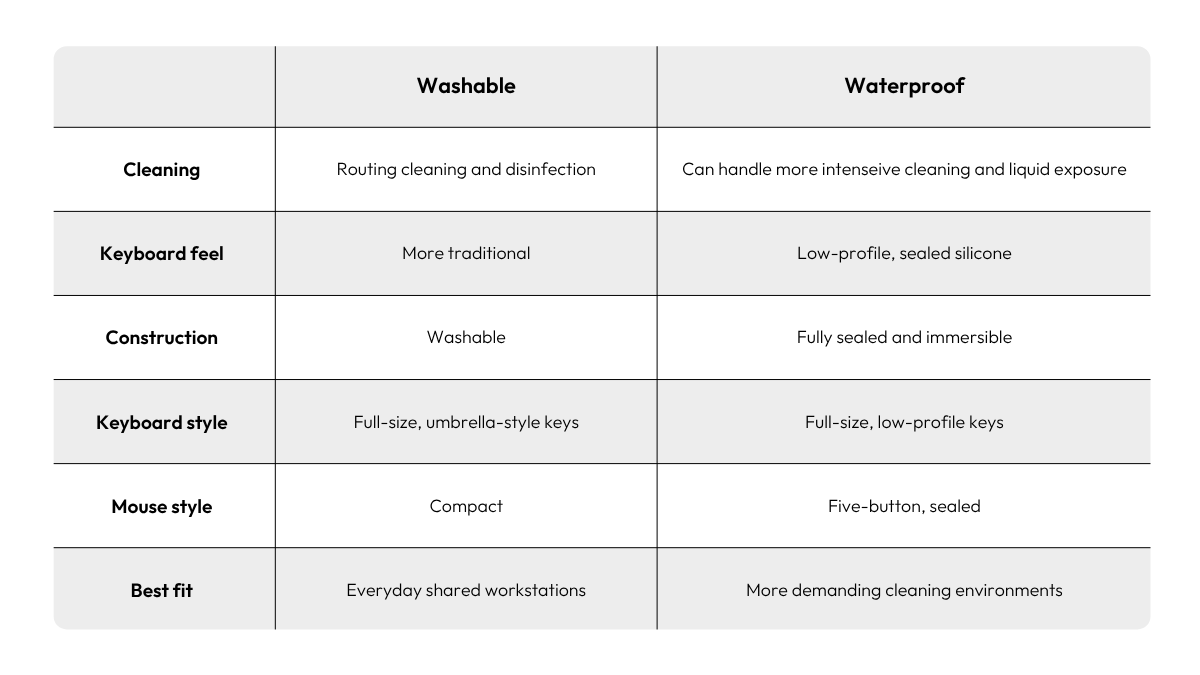
Comparison chart between washable and waterproof keyboards and mice for healthcare

Washable Keyboards and Mice

Washable models are a strong fit for everyday clinical environments where equipment needs to tolerate routine cleaning and disinfection.

The washable keyboard provides a more traditional typing experience with a full-size or compact layout, umbrella-style keys, keyboard tilt, and IP65 washable construction. The washable mouse uses a compact IP68 design, making it a practical option for workstations where available space is limited.
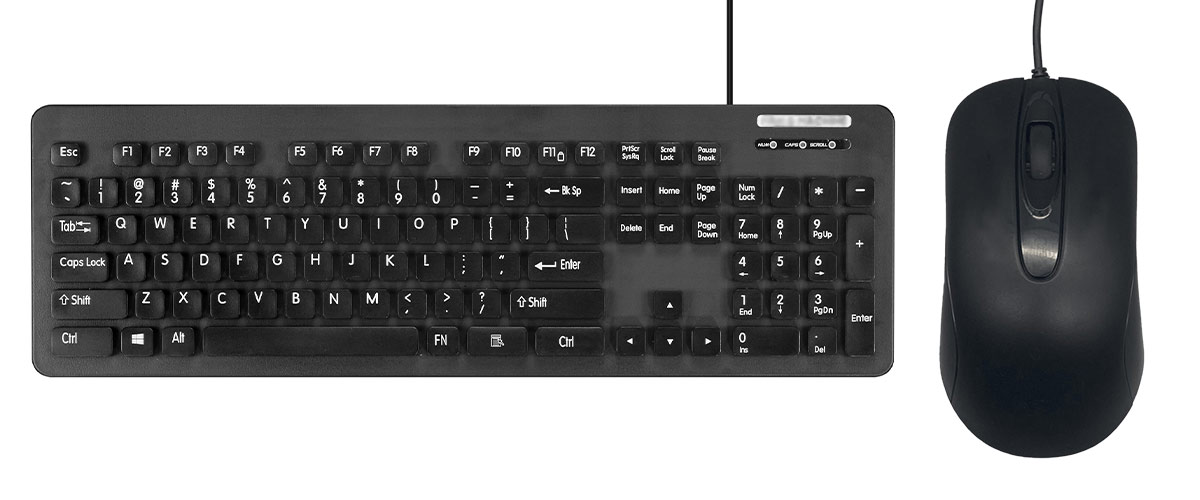
Black keyboard best for medical carts

Waterproof Keyboards and Mice

Waterproof models provide a higher level of sealing for environments where liquid exposure or more intensive cleaning is a concern.

The waterproof keyboard is fully sealed, waterproof, and immersible. It uses low-profile keys and has no moving parts, creating a smooth surface for cleaning. The waterproof mouse uses the same sealed approach and includes five-button functionality.

The biggest difference between the two categories is the construction. Washable models are designed to withstand routine cleaning while maintaining a more familiar keyboard and mouse experience. Waterproof models prioritize a fully sealed, immersible design.
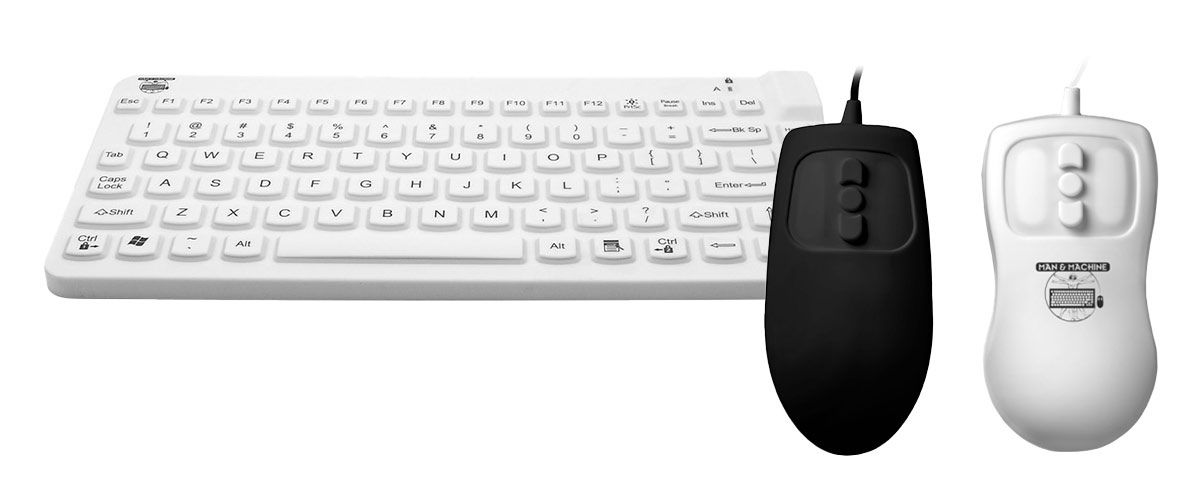
Waterproof keyboards and mice best for workstations on wheels

3. Available Keyboard and Mouse Features

Beyond the choice between washable and waterproof construction, healthcare organizations can select from a wide range of configurations based on their workstation and workflow.Available options may include:

  • Full-size or compact keyboards
  • Traditional umbrella-style or low-profile keys
  • Wired or wireless connectivity
  • Built-in backlighting
  • MagFix magnetic mounting
  • Integrated touchpads
  • Keyboard tilt
  • Quick-disconnect cables
  • TruLock cleaning mode
  • White, black, or red finishes
  • Fitted keyboard drapes
  • Compact mouse designs
  • Five-button mouse functionality
  • IP65 or IP68 washable construction
  • Fully sealed, waterproof, immersible designs
  • TAA-compliant models
  • Compatibility with EPA-certified disinfectants

Not every feature is available on every model, so the best configuration depends on the specific workstation and clinical application.
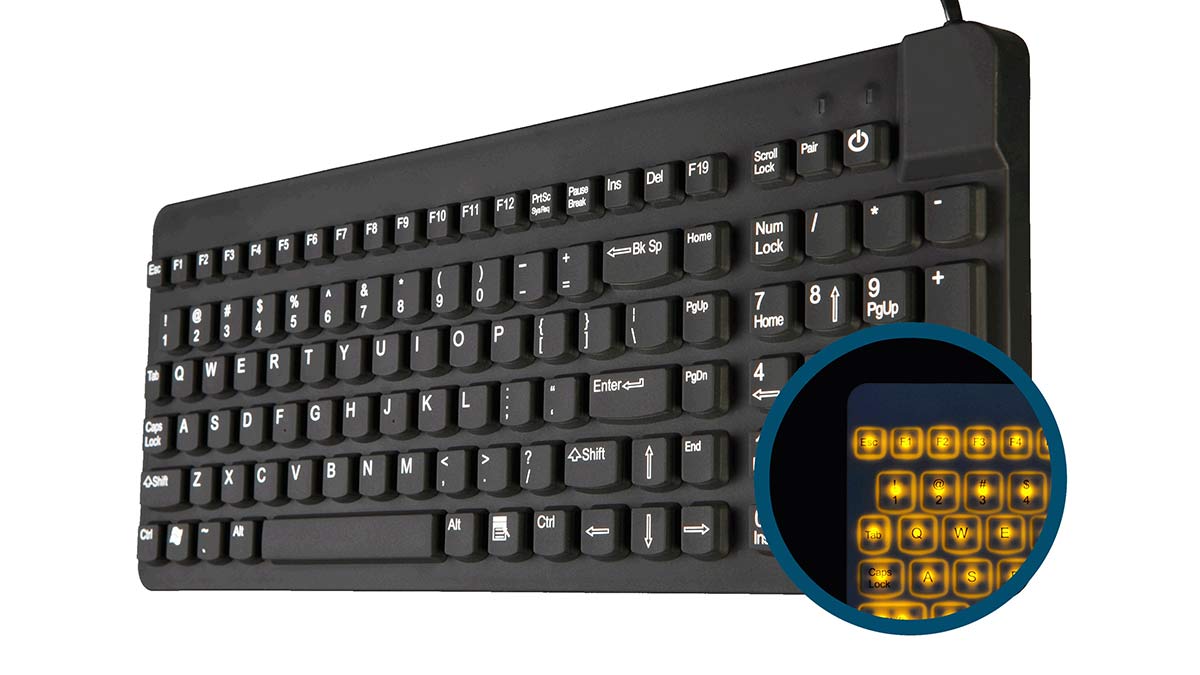
Medical keyboard with backlight

4. Which Features Matter for Different Workstations?

The best keyboard and mouse setup depends heavily on where the equipment will be used.

For a medical cart or workstation on wheels, compact keyboard/mouse size and secure positioning may or may not be important. Smaller peripherals can preserve added worksurface space, though many carts are configured to accommodate full-size peripherals.

At a shared nursing station, typing comfort and full-size functionality may matter more, especially for users who perform frequent documentation.

For a wall mounted workstation, space-saving configurations such as compact keyboards, integrated touchpads, or wireless options may be especially helpful. MagFix magnetic mounting can also help keep the keyboard securely in place when it is flipped up and stowed closer to the wall, helping maintain a clean, compact footprint when the workstation is not in use.

In areas with more demanding cleaning requirements, fully sealed waterproof models may be the better fit.


5. Cleaning Washable and Waterproof Keyboards and Mice

Both washable and waterproof models are designed to support routine cleaning at the workstation, but facilities should always follow the cleaning instructions for the exact model being used.

For the washable and waterproof products covered by our cleaning guides, surfaces can be wiped, brushed, or sprayed using cloths, sponges, or soft-bristle brushes. The USB connector should not be placed in fluid, and the product can be wiped dry or allowed to air dry after cleaning.

Recommended cleaning categories include:

  • 1:10 bleach solution
  • Alcohol-based cleaners
  • Hydrogen peroxide solutions
  • Quaternary ammonium cleaners
  • Phenol-based cleaners
  • Soap and water

We advise against petroleum-based cleaning fluids, acetone, bleach concentrations greater than 10 percent, abrasive cleaners, temperature or pressure sterilization, and scrubbing or buffing pads.
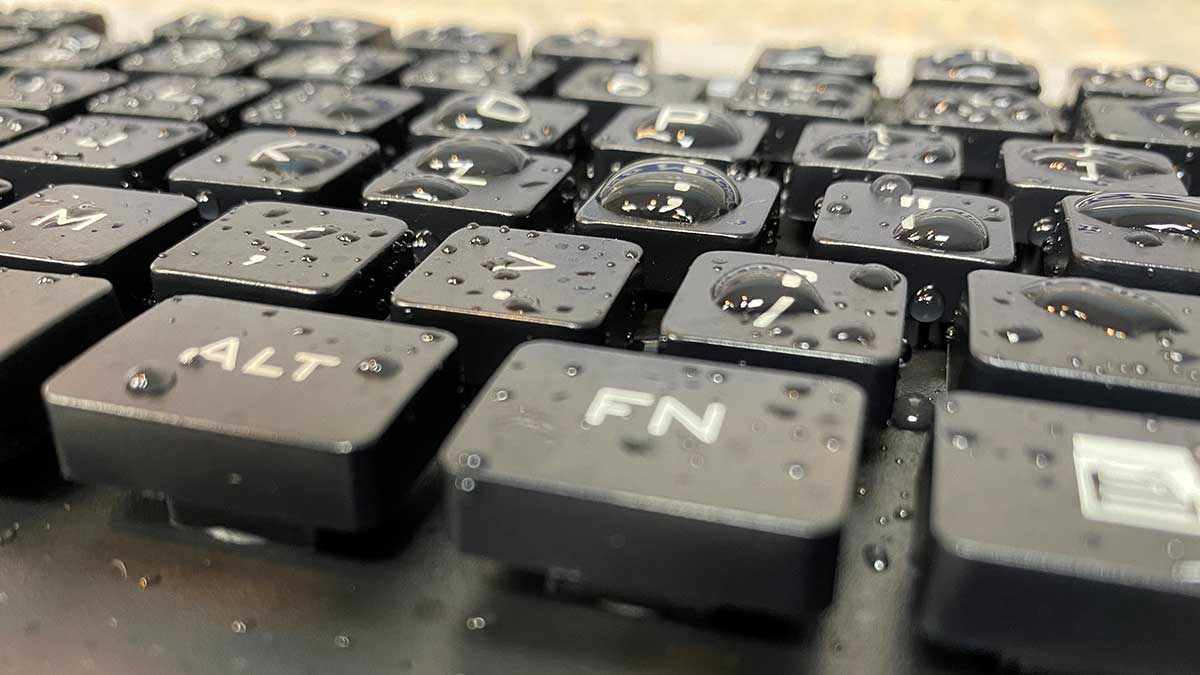
Washable keyboard for healthcare with water drops

6. FAQ

Compact keyboards reduce the amount of worksurface required for documentation, leaving more room for scanners, supplies, monitors, and other clinical equipment. This can be especially useful on workstation-on-wheels setups, wall mounted workstations, and small nursing stations where usable space is limited. However, the numeric keypad to the right of the keyboard is eliminated, making number-heavy charting time consuming and less ergonomic.

The best keyboard depends on the cart, available worksurface space, cleaning requirements, and how frequently clinicians document. Compact models can help preserve workspace, while full-size models may be more comfortable for frequent typing.

Other useful considerations include washable or waterproof construction, connectivity, and whether a touchpad or backlighting would benefit the application.

Hospitals should consider cleanability, comfort, size, functionality, and how frequently the mouse will be shared and disinfected.

A compact washable mouse may work well for general shared workstations, while a fully sealed waterproof mouse may be preferred in environments with more demanding cleaning requirements.

A washable keyboard is designed to tolerate routine cleaning and disinfection while maintaining a traditional keyboard feel.

A waterproof keyboard uses fully sealed, immersible construction and low-profile keys with no moving parts, making it better suited for applications where liquid protection and more intensive cleaning are priorities.

Yes. Select washable and waterproof keyboards include TruLock functionality, which allows users to temporarily disable the keyboard while cleaning it without shutting down or disconnecting the computer.

The exact locking procedure varies by model, so users should follow the cleaning instructions provided with their specific keyboard.


Choosing the Right Keyboard and Mouse for Your Workstation

There is no single keyboard or mouse that works best for every healthcare environment.

Some facilities may prioritize a familiar typing experience and routine washability. Others may need fully sealed, immersible peripherals. Space, workstation type, cleaning protocol, and clinician preferences can all influence the right choice.

Convergint-IMS offers a variety of washable and waterproof keyboards and mice and can help you select the right configuration for your medical cart, nursing station, wall mounted workstation, or other clinical application.


What are antimicrobial materials?

What are Antimicrobial Materials?

In healthcare, cleanability and durability matter.

From workstations and carts to cabinets and overbed tables, high-touch products are used every day by caregivers, patients, families, and environmental services teams. They are cleaned frequently, moved throughout care spaces, and expected to hold up in demanding environments.

“Antimicrobial” does not always tell the full story. The term can describe different material technologies, performance claims, and product applications.

For healthcare teams, the important questions are practical: What is the material designed to do? How does it hold up to routine cleaning? Does it support long-term durability? And how should it fit into a broader cleanability strategy?

Understanding these details helps teams make more informed decisions about high-touch surfaces, product performance, and long-term value.


  1. What Does “Antimicrobial” Mean?

In simple terms, antimicrobial materials are designed to help inhibit the growth of microorganisms on a product surface.

Depending on the product and its claims, this may include:

  • Bacteria
  • Mold
  • Mildew
  • Fungi
  • Algae
  • Odor-causing microbes
What does antimicrobial mean?

In many healthcare furniture and equipment applications, antimicrobial technology is used to help protect the product surface from stains, odors, and microbial deterioration.

However, antimicrobial materials are not self-cleaning. They do not replace routine cleaning or disinfection. Unless a product has specific public-health claims supported by the proper registration, antimicrobial protection should not be positioned as something that protects patients, caregivers, or others from disease-causing organisms.


  1. How Are Antimicrobial Materials Made?

Antimicrobial materials are typically made by adding an antimicrobial agent to a base material, such as plastic, HDPE, laminate, coating, or finish.

The base material gives the product its structure, durability, and cleanability. The antimicrobial agent helps inhibit the growth of certain microorganisms on the product surface. The chemistry of antimicrobial agents disrupts the life functions of bacteria at a cellular level.

For example, some antimicrobial polymers use zinc-based or silver-based additives as agents. These additives are incorporated into the material or surface treatment and protect the product from stain- and odor-causing bacteria, mold, mildew, fungi, or algae.

Antimicrobial technology can be added to materials in different ways.

2a. Integrated into the Material

In some antimicrobial polymers, the antimicrobial additive is incorporated into the product molding during manufacturing. This means the protection is part of the polymer itself, and the antimicrobial additive will not leach out of the product.

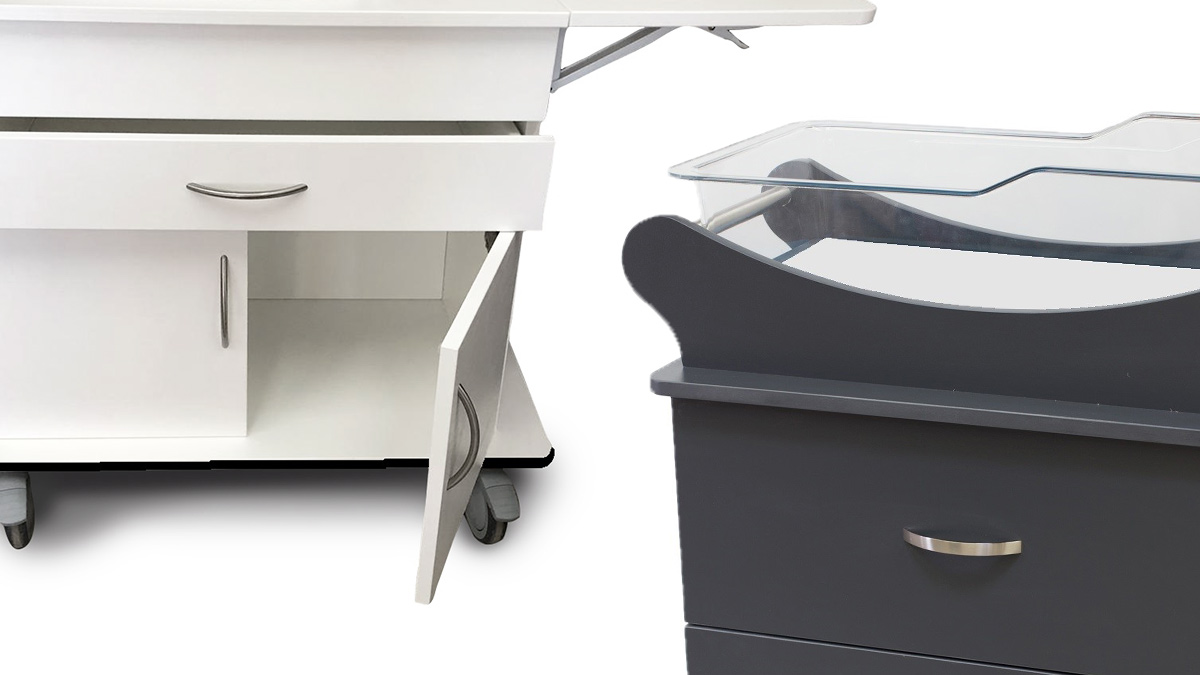
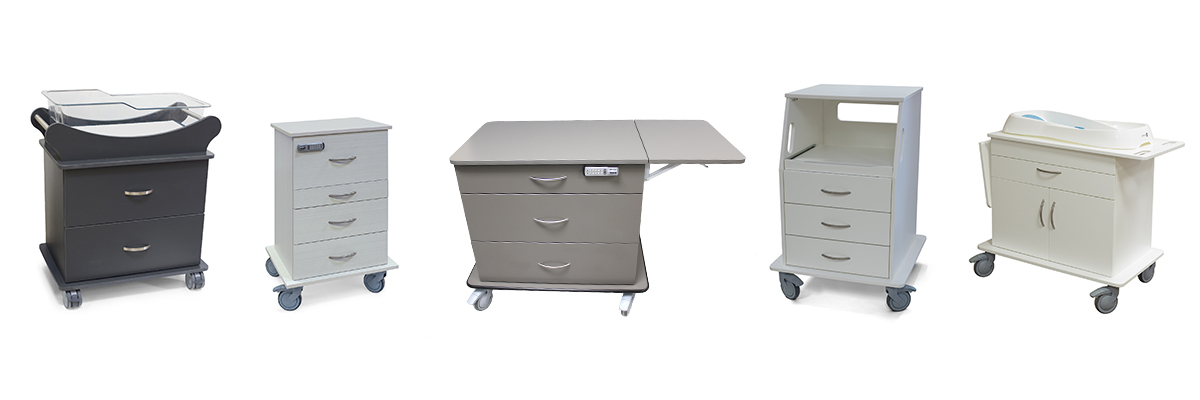
Many of our L&D carts and furniture are manufactured with antimicrobial additives bonded to HDPE thermoplastic polymer itself, including:

With this type of antimicrobial plastic, the additive is part of the polymer material. This kind of technology is bonded at the molecular level throughout the polymer sheet. For our products,  frequent cleaning will not affect the appearance, durability, or antimicrobial treatment when proper cleaning and maintenance guidance is followed. It is non-porous and will not become absorbent to fluids over time, supporting JHACO standards.

The antimicrobial benefit still occurs at the surface, where contact with microorganisms takes place, but the technology is not dependent on a separate surface layer alone.

2b. Applied as a Surface Coating or Treatment

Other antimicrobial technologies may be applied as coatings, finishes, films, surface treatments, or treated high-touch components.

This does not make antimicrobial coatings inferior. Coatings provide meaningful value when they are engineered for the right product, surface, and use environment. They may be especially useful when antimicrobial protection is needed on a specific touch point, finished surface, or material that cannot be manufactured with an additive throughout.

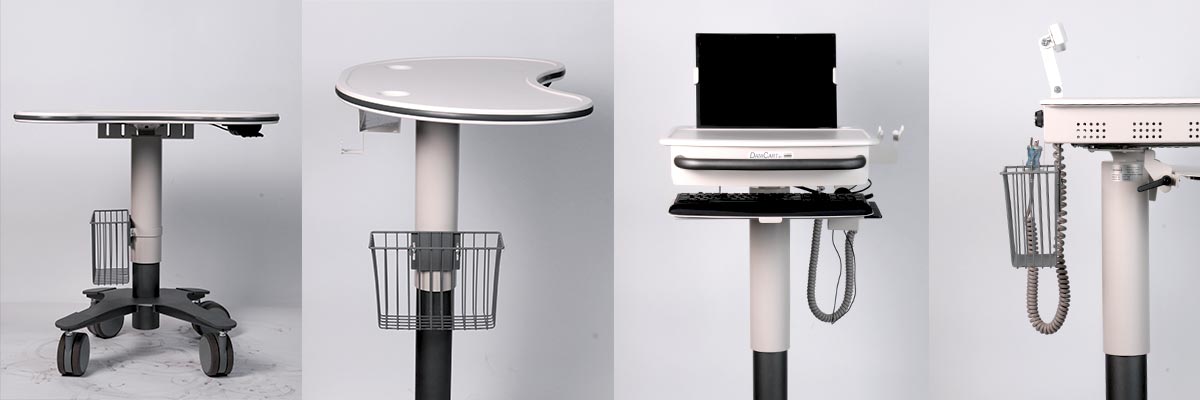
Many of our computer carts are manufactured with antimicrobial additives in high-touch points, such as:

Antimicrobial laptop cart for medical use

  1. Do Antimicrobial Materials Replace Cleaning?

No.

Antimicrobial materials can help surfaces stay cleaner between cleanings. They can help protect the product from stain- and odor-causing microbes. They may also help extend the useful life of a product by reducing microbial deterioration.

But they do not replace:

  • Routine cleaning
  • Disinfection protocols
  • Environmental services procedures
  • Infection prevention practices

Most manufacturers’ antimicrobial documentation specifically states that the product does not protect users or others from disease-causing bacteria and should always be cleaned thoroughly after use.

That is the safest and most accurate way to frame antimicrobial technology. It is an added layer of product protection, not a substitute for cleaning.


  1. Why This Matters in Healthcare

Healthcare products need to do more than look good on day one.

They need to hold up to frequent cleaning, and consistent, rugged use. That is especially true for carts, casework, bassinets, overbed tables, and other products used in patient care spaces.

Antimicrobial technology can support that goal by helping protect product surfaces from microbes that cause staining, odor, and material degradation.

It can also support cleaner, more durable healthcare surfaces between routine cleanings.

For healthcare teams, the value is practical:

  • Products stay cleaner between cleanings.
  • Surfaces are better protected against odor and staining.
  • Materials can support long-term durability.
  • High-touch products are designed with real-world use in mind.

Antimicrobial technology should be part of a broader product conversation. Cleanability, chemical resistance, material selection, and product design all play an important role in long-term performance.

The right solution brings those pieces together.


  1. FAQ

Yes. Antimicrobial materials still need to be cleaned and disinfected according to facility protocols. Antimicrobial technology is designed to support product-surface protection between cleanings, not replace cleaning.

In short, no, as long as manufacturer cleaning directions are followed. Healthcare-grade antimicrobial materials are designed to hold up to routine cleaning when compatible cleaning agents are used as directed.

For solid HDPE with antimicrobial additives built into the material, such as our labor and delivery cart line, the material can be cleaned with any hospital cleaner, with the exception of undiluted bleach. Because the color and antimicrobial properties run through the material, these products are designed to withstand repeated cleaning without compromising the appearance or antimicrobial performance.

For antimicrobial coatings or treatments used on specific areas, such as high-touch points, cleaning compatibility should be confirmed with the manufacturer. Approved cleaning agents are tested to ensure they do not damage the antimicrobial finish or affect its intended properties.

Look beyond the word “antimicrobial.”

Ask how the technology is incorporated, what the material is designed to protect against, which cleaning agents are compatible, and whether the product has been tested for repeated cleaning, abrasion, and daily use.


The Bottom Line

Antimicrobial materials can offer real value in healthcare settings.

They help protect surfaces from stain- and odor-causing microbes. They can support cleaner products between cleanings. They can also contribute to long-term durability in high-touch environments.

When used correctly, antimicrobial materials can support cleaner, more durable healthcare spaces. They are not a replacement for cleaning, but they can be a smart part of a broader cleanability and product-performance strategy.

Contact us to learn more about our antimicrobial carts and furniture, and how they support long-term durability, cleanability, and everyday clinical workflows.

Joint Commission Equipment Checklist

Joint Commission Equipment Checklist

Purchasing medical equipment is not just a clinical or operational decision. It is an accreditation decision.

For purchasing teams, IT directors, OB leaders, and facilities staff, equipment choices directly impact preventive maintenance programs, documentation requirements, infection prevention policies, and survey readiness. Selecting the wrong cart, power strip, or surface material can create additional policy complexity or result in survey findings that require corrective action.

This guide outlines key Joint Commission considerations and practical equipment checkpoints to help healthcare buyers make informed decisions that support accreditation readiness.


1)  Understanding The Joint Commission Requirements

1.1)  What is The Joint Commission?

The Joint Commission (TJC) is a CMS-recognized accrediting organization that evaluates healthcare facilities for compliance with patient safety, infection prevention, and Environment of Care standards.

Hospitals may also choose other CMS-approved accreditation agencies such as DNV or HFAP. CMS maintains a current list of accrediting organizations for prospective clients. Regardless of the accrediting body, facilities must meet CMS Conditions of Participation to maintain reimbursement eligibility.

CMS Centers for Medicare and Medicaid Services Logo

Accreditation affects:

  • Patient safety protocols
  • Infection prevention programs
  • Equipment maintenance policies
  • Documentation standards

For healthcare buyers, this means purchasing decisions influence more than clinical workflow. They shape compliance requirements.


1.2)  Environment of Care Considerations

Many Joint Commission expectations for equipment live under the Environment of Care framework. In practical terms, surveyors want to see that your organization can identify medical equipment, determine which devices are higher risk, and demonstrate that inspection, testing, and maintenance occur on schedule and are documented. The equipment itself matters, but so does your organization’s ability to manage it reliably.


1.3)  Broader Equipment Compliance Considerations

In addition to TJC standards, facilities should align equipment purchases with:

  • TIP Test expectations for ligature risk in behavioral health environments
  • ISO 9001:2015 quality and risk management principles, particularly for DNV-accredited facilities
  • UL and IEC electrical safety certifications, including UL 60601-1 and UL 1363A for medical electrical equipment

IT and clinical engineering teams should confirm certifications before purchase, as retroactive compliance adjustments can increase cost and documentation burden.


1.4)  Lessons Learned From Real Survey Findings

As a healthcare equipment provider, we track common equipment-related survey findings reported by facilities following Joint Commission walkthroughs.

Frequently cited concerns include:

  • Porous wood carts and furniture in clinical areas
  • Use of hook and loop fasteners in patient care environments
  • Damaged surfaces that compromise cleanability
  • Equipment that lacks clear identification or maintenance traceability

These are not abstract standards. They are practical findings that often require replacement, remediation, or policy updates.


1.5)  What This Blog Covers

Below, we outline several equipment categories that require special consideration from an accreditation standpoint, with a focus on how purchasing decisions influence compliance.

While we work closely with healthcare facilities on equipment compliance, we are not an accrediting body. Always refer to official Joint Commission guidance and your accrediting organization for definitive requirements.

The Joint Commission National Quality Approval Badge

2)  General Equipment Management and Maintenance Documentation

Before surveyors examine equipment, they review documentation.

2.1)  Inventory and Asset Tracking

Checklist:

  • Maintain a complete, current inventory of all medical equipment, including identification of high-risk and life-support devices
  • Ensure each piece of equipment can be clearly identified and traced to maintenance and inspection records. Many facilities use asset tags or barcode systems to support this requirement

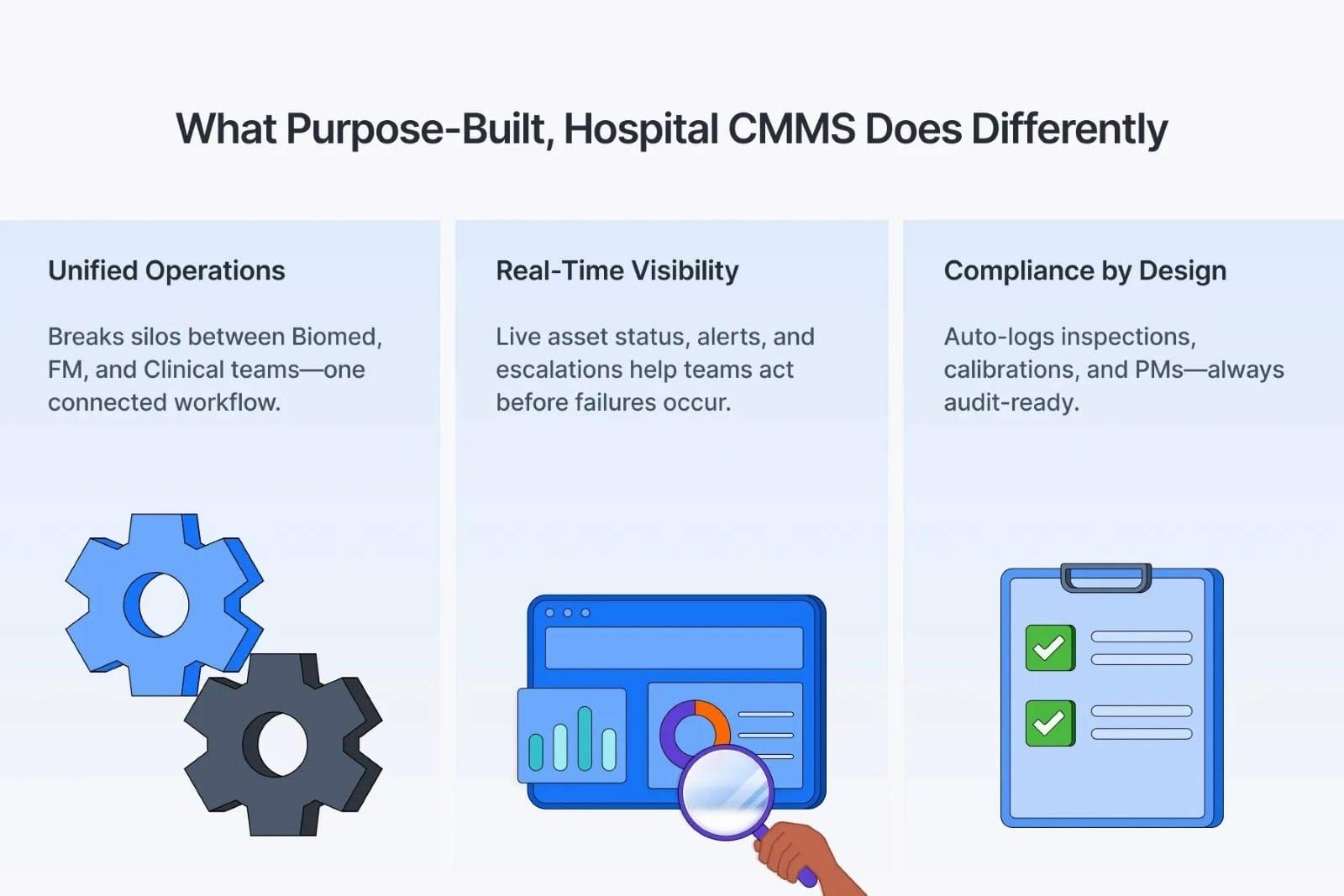
From a purchasing perspective, consider how easily new equipment can be integrated into your CMMS and tracking systems before placing orders.

What does CMMS do for hospitals

2.2)  Preventive Maintenance and Inspection Records

Checklist:

  • Preventive maintenance schedules align with manufacturer recommendations
  • Alternative Equipment Maintenance (AEM) documentation is available if used
  • Calibration and safety testing logs are accessible for review

Equipment without clear manufacturer maintenance instructions can increase policy development work for clinical engineering and facilities teams. Buyers can reduce downstream work by confirming that maintenance guidance and documentation are available at time of purchase.


3)  JHACO Medical Equipment Requirements: Crash Carts

Emergency carts are frequently reviewed during surveys because they combine medication access, equipment readiness, and operational reliability.

3.1)  Cart Construction and Cleanability

Checklist:

  • Non-porous cart surfaces that are easy to disinfect
  • Readily accessible for immediate use

Selecting carts constructed with healthcare-grade materials helps ensure long-term durability, supports infection prevention protocols, and reduces the likelihood of surface-related survey findings.

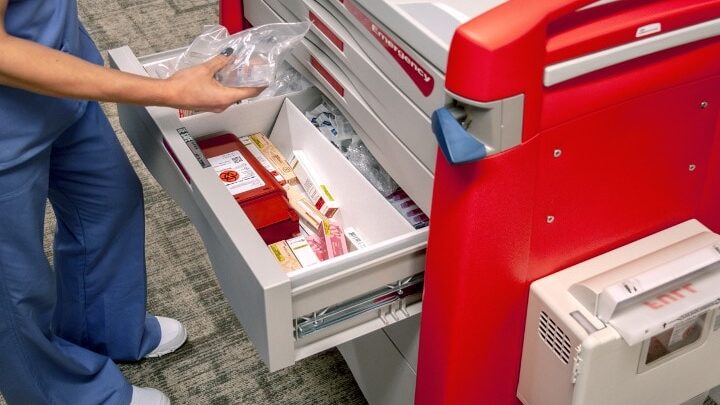
Emergency Cart Storage for Joint Commission

3.2)  Equipment and Supply Readiness

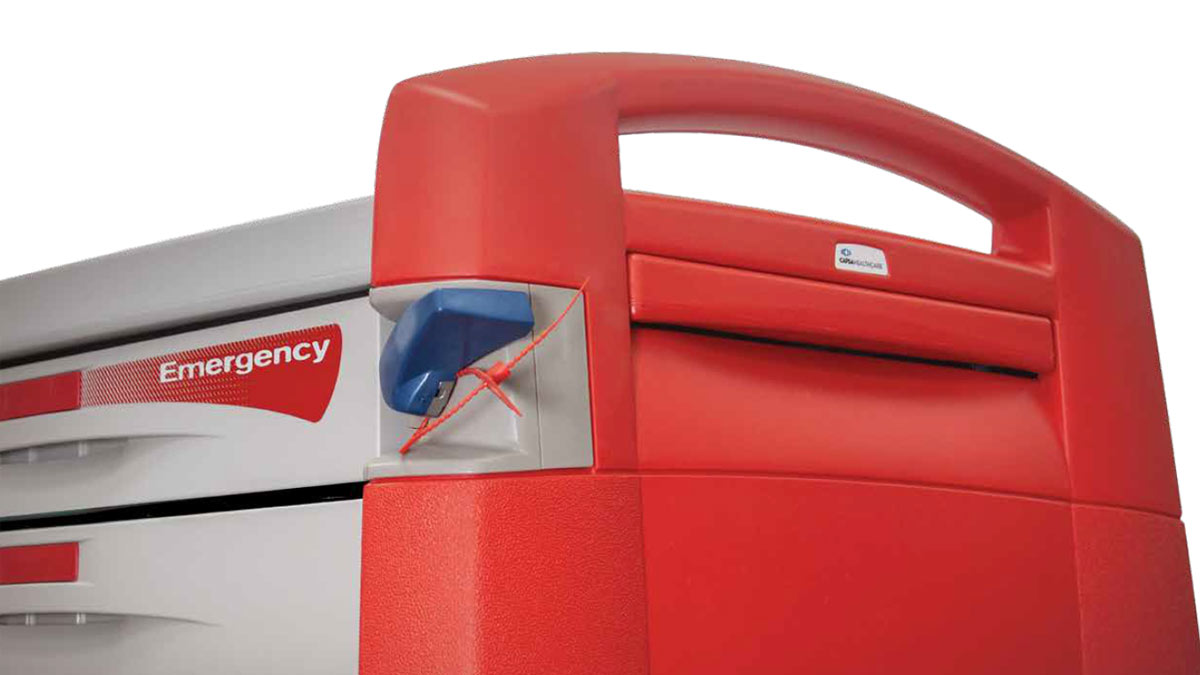
Joint Commission guidance states that locking devices on crash carts that create delays or barriers to immediate access may be interpreted as not readily accessible for use. Breakaway tags with numeric identification numbers are acceptable if there is a defined monitoring process in place.

Checklist:

Purchasing teams should confirm that crash carts support breakaway tag systems rather than complex locking mechanisms that may raise accessibility concerns. When carts require special keys or slow access, facilities often have to create extra procedures to justify readiness.

Hemmorhage Cart Breakaway Tag for Joint Commission

3.3)  What Surveyors Often Do in Practice

During tracers, surveyors may ask staff to identify the cart, confirm it is in the expected location, and explain how integrity checks are performed. They may also look at surface condition, labels, and whether the cart can be cleaned effectively using approved disinfectants. A cart that is hard to clean or hard to access can create compliance concerns even if it is stocked correctly.


4)  JHACO Medical Equipment Requirements: Postpartum Hemorrhage Carts

Postpartum hemorrhage carts share similarities with emergency carts but carry additional scrutiny under Joint Commission’s Provision of Care, Treatment, and Services standards for maternal safety. Read our blog about it here.

4.1)  Cart Construction and Cleanability

Checklist:

  • Non-porous, seamless cart surfaces
  • Drawers and handles easy to disinfect
  • Immediate accessibility consistent with emergency cart guidance


4.2)  Standardization and Accessibility

Checklist:

  • Standardized cart layout across units
  • Approved procedures documented
  • Locked and controlled access to medications
  • Immediate availability during obstetric emergencies

Standardization reduces confusion during clinical events and supports policy compliance. From a buyer standpoint, purchasing the same cart model across units can reduce variation, simplify training, and make stocking and documentation more consistent.


5)  JHACO Medical Equipment Requirements: Labor and Delivery Carts and Furniture

Historically, many bassinets, fetal monitor carts, and L&D furniture components were constructed using wood.

Joint Commission correspondence has clarified that if surfaces are porous or not cleanable, they do not provide a surface that can be appropriately disinfected, and therefore may not meet accreditation expectations.

As a result:

  • Labor and delivery carts should be non-porous
  • Wood components in patient care areas may require replacement
  • Surfaces must withstand hospital-grade disinfectants

Purchasing non-porous alternatives reduces the risk of future replacement requests and can help infection prevention teams standardize cleaning procedures.

Antimicrobial Non-Porous Labor and Delivery Carts

6)  JHACO Medical Equipment Requirements: Computer on Wheels

Computers on Wheels (COWs), or mobile workstations, are frequently evaluated during accreditation surveys due to their impact on infection prevention, electrical safety, and Life Safety requirements.

One key consideration is storage. COWs should not be parked in corridors when not in use, especially for charging, as this can obstruct egress and conflict with Life Safety expectations. Facilities should plan for designated storage and charging areas.

6.1)  EMR Cart Construction and Cleanability

Checklist:

  • Non-porous, cleanable cart surfaces
  • Durable surfaces that withstand hospital-grade disinfectants
  • Cleanable keyboards, mice, and touchpoints
Computer on Wheels Cleanable

6.2)  Electrical Safety and Charging Considerations

Checklist:

  • Integrated power systems that meet UL 60601-1 or applicable standards
  • No use of non-compliant extension cords or residential power strips
  • Proper cord and plug integrity

Selecting carts with compliant, integrated power systems helps reduce electrical safety risks.


7)  JHACO Medical Equipment Requirements: Medication Delivery

Medication management standards are detailed and stringent. Below are general equipment-focused considerations.

7.1)  Medication Storage and Security

Checklist:

  • Locking medication carts and cabinets
  • Separation of controlled substances
  • Documented expiration date checks

Selecting carts with secure locking mechanisms and smooth cleanable surfaces simplifies compliance for pharmacy and nursing leadership.

Medication Carts at Convergint-Innovative Medical Carts

8)  JHACO Medical Equipment Requirements: Electrical Safety and UL Standards

Electrical compliance is a frequent survey focus area, particularly in patient care spaces.

8.1)  UL Listing and Certification

Checklist:

  • Electrical and mechanical integrity verified and documented
  • UL or equivalent certification confirmed
  • Alignment with NFPA code requirements

Buyers should verify certifications prior to purchase, especially for power strips and integrated equipment assemblies.


8.2)  Safe Use in Patient Care Areas

The following requirements apply within six feet of the patient bed, chair, or table.

Checklist:

  • Power strips are used only on movable medical equipment and are permanently attached
  • Compliance with UL 1363A or UL 60601-1 where applicable
  • Not used for personal electronics
  • Proper grounding and plug integrity
  • Damaged cords removed from service

Electrical compliance is not just a facilities issue. It begins at the purchasing stage, especially when departments independently source power accessories or add components to existing assemblies.


9)  What To Do After Receiving New Equipment

Accreditation risk does not begin at the time of a survey. It often begins the day equipment is delivered and placed into service.

Healthcare buyers, IT teams, and clinical engineering departments should have a standardized intake process for all newly received equipment.

9.1)  Electrical Safety Testing

Before placing equipment into clinical use:

  • Perform initial electrical safety testing per facility policy
  • Verify grounding and plug integrity
  • Confirm alignment with applicable UL and NFPA requirements

This step is especially important for devices that will be used within patient care areas or connected to other equipment assemblies.


9.2)  Obtain and Retain Manufacturer Documentation

Every piece of equipment should be accompanied by:

  • Manufacturer cleaning and disinfection instructions
  • Preventive maintenance recommendations
  • Technical specifications and certifications

Request, print, and retain these documents as part of your equipment file. Surveyors frequently ask how equipment is cleaned and maintained. Having manufacturer guidance readily available strengthens compliance.

Equipment Maintenance Documentation Joint Commission

9.3)  Integrate Into Preventive Maintenance Programs

Before deployment:

  • Add the device to your CMMS or tracking system
  • Assign preventive maintenance frequency
  • Identify whether the equipment qualifies as high-risk or life-support

Purchasing equipment without a clear path to maintenance integration can create documentation gaps later.


10)  Staying Survey Ready

Accreditation readiness is a year-round process, not a pre-survey scramble.

Proactive steps include:

  • Conduct mock inspections using official guidance from your accrediting agency
  • Replace non-compliant equipment such as porous wood furniture proactively
  • Standardize documentation across departments
  • Confirm manufacturer cleaning and maintenance instructions at the time of purchase

Most importantly, partner with equipment providers who understand accreditation expectations and can help you select products that align with infection prevention, electrical safety, and documentation requirements.


11)  Frequently Asked Questions

Asset tags are not explicitly required. What is required is the ability to identify equipment in your inventory and trace it to maintenance and inspection records. Many facilities use asset tags or barcode systems as a practical way to support identification, tracking, and documentation.

Survey focus is typically on whether surfaces are cleanable and non-porous. If a cart or furniture surface cannot be appropriately disinfected, or if it has deteriorated in a way that affects cleanability, it can create infection prevention concerns and potential findings. Facilities commonly replace porous or difficult-to-clean surfaces as a result of TJC walkthroughs.

In patient care areas, requirements are more restrictive. Power strips are generally expected to be used only on movable medical equipment and to be permanently attached, with appropriate UL standards depending on the application. Facilities should verify compliance with their Environment of Care and Facilities policies, and confirm manufacturer guidance and applicable UL standards before deployment.

Frequency is typically defined by facility policy and may vary by department and risk level. The key survey expectation is that cart checks are performed consistently, documented, and that the emergency cart remains readily accessible for immediate use.

Buying equipment that lacks clear maintenance documentation, is difficult to clean, or introduces electrical safety and accessibility concerns can force departments to create workarounds and purchase additional equipment. Over time, those workarounds increase compliance burden and create more points of failure during survey tracers.


Joint Commission Expertise at Convergint-Innovative Medical

If you are reviewing medical carts, OB equipment, medication storage, or electrical compliance across your facility, our team can help assess your current equipment and identify alternatives designed for healthcare environments.

Contact Convergint-Innovative Medical to schedule a call and reduce your survey risk before your next accreditation cycle.

Task Light for Charting at Night in Hospitals

Support Patient Sleep: Minimize Sleep Disruptions in Hospitals

Hospitals are designed to heal, but for patients, one of the most important factors in their recovery is sleep. However, disruptions during night rounds, including waking up patients at night or other noises, can hinder this crucial rest. It’s not news that hospitals around the world are changing their vital sign monitoring schedules, prescribing medications with longer distribution intervals, and implementing environmental changes to support sleep. In this blog, we’ll summarize how certain products can help support patient sleep during night charting and rounds.

Lightweight & Discreet Carts

Night rounds involve healthcare workers charting on patients’ conditions, which can be extremely disruptive if the equipment is bulky or noisy. Lightweight and discreet mobile carts are essential in minimizing disturbances and upsetting patients. Our selection of computer carts, mobile labor & delivery carts, and medical carts are all designed to be quiet & easy to maneuver, allowing staff to move through patient rooms with minimal noise. Their ergonomic design & thoughtful wheel choices make them ideal for night rounds, helping to support patient sleep while still providing staff with the tools they need.

Dimmed Lighting on Carts & Wall Mounts

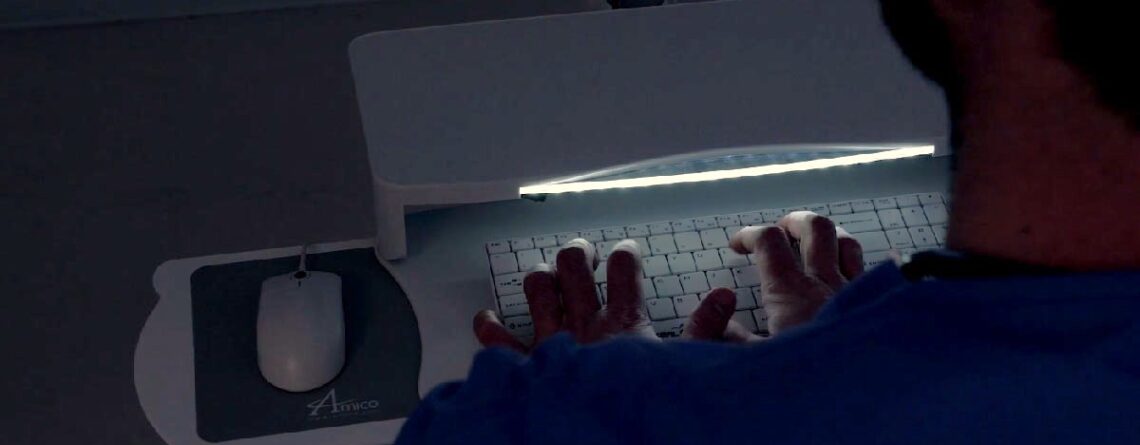
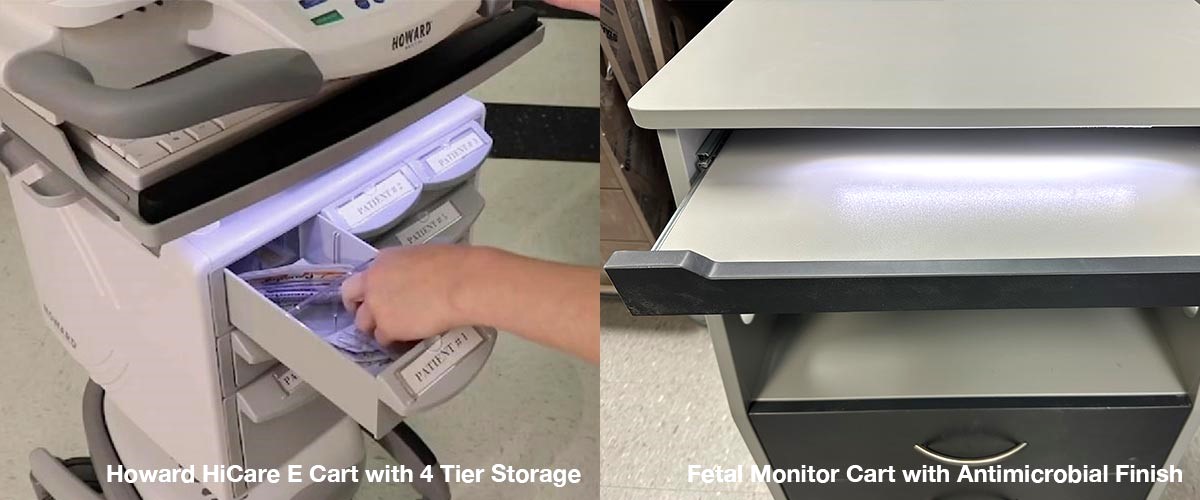
Bright lights can be harsh and disruptive when it’s time for patients to sleep, but dimmed lighting on computer carts ensures a softer ambiance. While each of our powered carts, wall mounts, & fetal monitor carts feature optional task lights for the worksurface, the Howard HiCare E Carts feature the widest range of lighting. With dimmable lights in both white & red for the worksurface, keyboard, AND storage, automatically built into your cart, your chances of disturbing the patient’s sleep decrease significantly. By controlling the light intensity, staff can perform charting tasks at night while preserving the peaceful environment needed to support patient sleep. This simple feature makes a significant difference in minimizing sleep disruptions in hospitals, especially during late-night checks.

Workstation on Wheels Storage Light

Soft Close Drawers on Mobile Carts

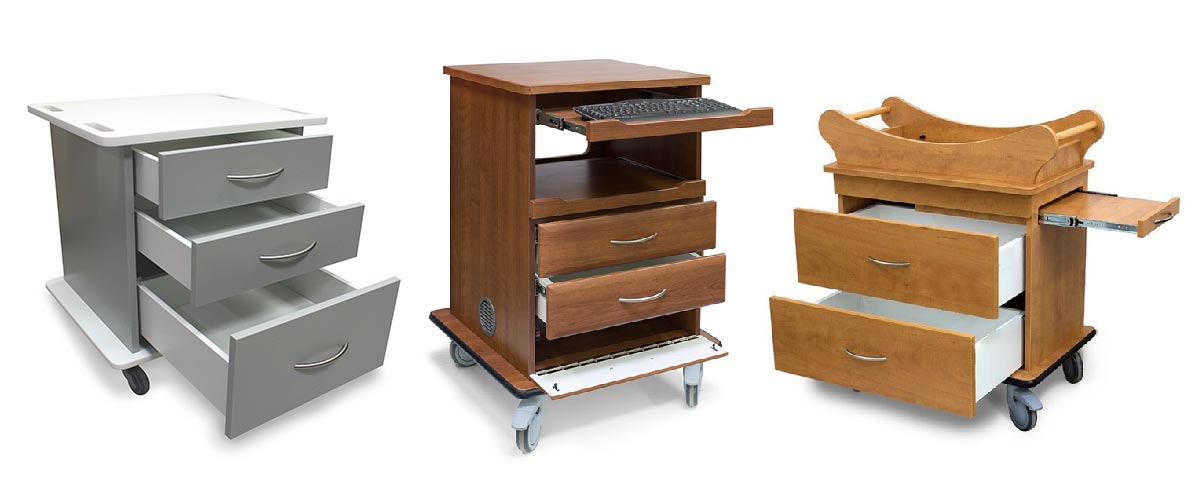
One of the most common, yet often overlooked, sources of disruption is the noise created by drawers opening and closing. Soft-close drawers on mobile carts are a game-changer in minimizing these disturbances. Designed with quiet mechanisms, our entire labor & delivery product line features soft close drawers, ensuring that patients remain undisturbed during night rounds. From baby bassinets to bedside cabinets, this quiet feature plays a crucial role in creating a restful environment, allowing patients to sleep through night charting and monitoring without the abrupt noise from traditional drawers.

Delivery Cart, Fetal Monitor Cart, and Bassinet

Medical Equipment & Healthcare Solutions by Convergint– Innovative Medical

Incorporating these thoughtful features—lightweight carts, dimmed lighting, and soft-close drawers—into hospital settings can make a significant difference in supporting patient sleep. By minimizing sleep disruptions during night rounds, healthcare providers can enhance patient recovery and overall hospital experience.

Connect with Convergint at (800) 968-3135 to learn more about our attention to detail & mobile carts tailored to supporting patient rest.

Health Information Systems on Laptop

What is a Health Information System? Understanding its Role in Modern Healthcare

The importance of efficient and effective management of health information cannot be overstated. A Health Information System (HIS) is at the core of this management, integrating various processes and technologies to facilitate all patient care and streamline operations in hospitals and other healthcare facilities.

This article explores what a Health Information System is, its components, benefits, and its critical role in hospitals.

Defining Health Information System

A Health Information System is a comprehensive framework that collects, stores, manages, and transmits health data. This data can include patient records, treatment histories, medication lists, laboratory results, and more. HIS encompasses a variety of information technologies and tools that support the various aspects of healthcare delivery, enabling healthcare providers to make informed decisions, improve patient outcomes, and enhance the efficiency of healthcare services.

Key Components of a Health Information System

Health Information Systems comprise several key components that work together to facilitate the collection and management of health data:

  1. Electronic Health Records (EHRs): EHRs are digital versions of patients' paper charts, providing a comprehensive view of a patient's health history. They allow healthcare providers to access and update patient information in real-time, improving communication, accuracy, and coordination of care. Read about the best practices for EHR documentation.
  2. Clinical Decision Support Systems (CDSS): CDSS provides healthcare professionals with knowledge and patient-specific information, intelligently filtered and presented at appropriate times, to enhance patient care. This can include alerts about potential drug interactions, reminders for preventive care, and guidelines for treatment.
  3. Health Information Exchange (HIE): HIE enables the secure sharing of health information across different healthcare organizations. This facilitates coordinated care, reduces duplication of tests and procedures, and improves the continuity of care for patients.
  4. Practice Management Systems (PMS): PMS helps healthcare facilities manage their daily operations, including scheduling, billing, and patient registration. These systems streamline administrative tasks, allowing healthcare providers to focus more on patient care.
  5. Telemedicine Solutions: With the rise of telehealth, many HIS now include telemedicine capabilities, allowing healthcare providers to consult with patients remotely. This is especially important in increasing access to care and improving patient convenience.
  6. Mobile Health Applications: Mobile health apps allow patients to access their health information, schedule appointments, and communicate with their healthcare providers directly from their smartphones. These apps enhance patient engagement, convenience, and empowerment.

How does Convergint support HIS?

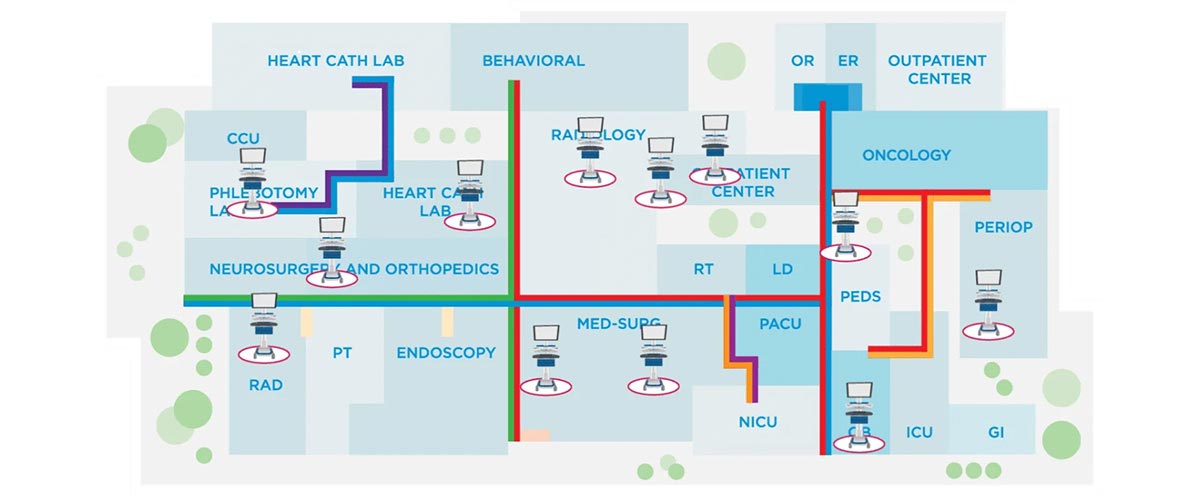
Convergint- Innovative Medical has supported the integration of EHR and other health information systems with Computer Mounting Systems for decades. Not only do we supply tried and true computer carts & wall mounted solutions compatible with HIS, but we find unique solutions to align clinician workflow with EHR / EMR input. Examples include medication label printer & barcode scanner mounts, locking medication doors with detailed data tracking, RFID badge entry, and fleet management software with IT helpdesk integrations.

2 EMR Computer Carts

Benefits of Health Information Systems in Hospitals

Implementing a Health Information System in hospitals can lead to a multitude of benefits, enhancing patient care as well as operational efficiency:

  1. Improved Patient Care: By providing healthcare providers with immediate access to comprehensive patient information, HIS enables more accurate diagnoses, better treatment plans, and improved patient outcomes. The ability to track patient histories and monitor ongoing treatments enhances the overall quality of care.
  2. Enhanced Data Management: HIS allows for efficient data collection and management, reducing the risk of errors associated with manual data entry and paper records. This leads to more reliable health information and helps ensure compliance with regulatory standards.
  3. Increased Efficiency: Automating administrative tasks such as billing, scheduling, and patient registration frees up staff time, allowing them to focus more on patient care. This increases overall hospital efficiency and reduces operational costs.
  4. Facilitated Communication: HIS enhances communication between healthcare providers by allowing them to share patient information seamlessly. This ensures that all members of the care team are on the same page, leading to better-coordinated care.
  5. Data Analytics and Reporting: Health Information Systems enable hospitals to analyze health data to identify trends, improve patient outcomes, and inform strategic decision-making. This can lead to enhanced quality improvement initiatives and better resource allocation.
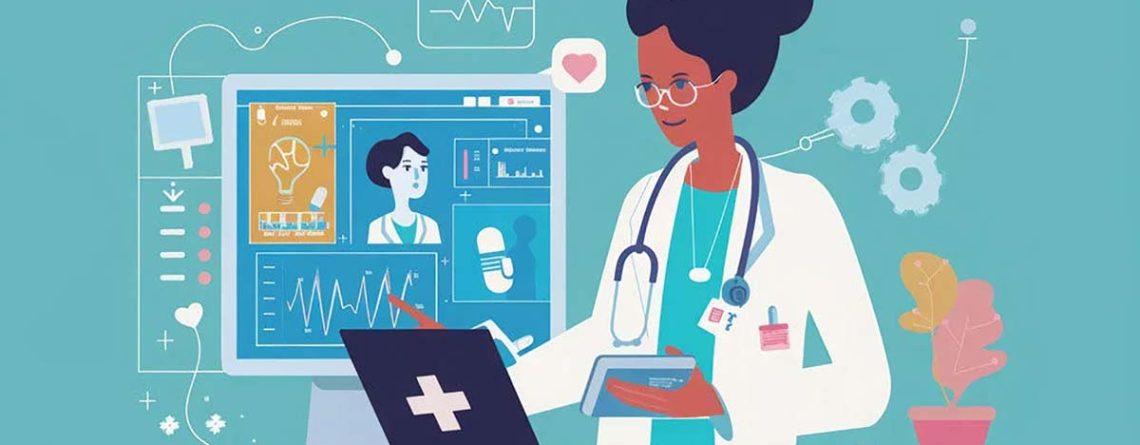
  6. Patient Engagement: With the integration of patient portals and mobile applications, HIS empowers patients to take an active role in their healthcare. Patients can access their medical records, schedule appointments, and communicate with their providers, leading to increased satisfaction and adherence to treatment plans.
EHR Mobile Application

The Role of Health Information Systems in Hospital Operations

In a hospital setting, the Health Information System plays a crucial role in various operational aspects:

  1. Clinical Operations: HIS supports clinical workflows by providing tools for documentation, order management, and patient tracking. This helps streamline processes such as admissions, discharges, and transfers, improving patient flow and reducing wait times.
  2. Financial Management: By integrating billing and coding processes, HIS helps hospitals manage their financial operations more effectively. Accurate coding and billing are essential for maximizing reimbursement and ensuring the financial sustainability of the organization.
  3. Regulatory Compliance: Healthcare organizations must comply with numerous regulations, such as HIPAA and Meaningful Use. HIS helps hospitals maintain compliance by ensuring that patient data is secure and that reporting requirements are met.
  4. Quality Improvement Initiatives: With access to real-time data, hospitals can monitor key performance indicators (KPIs) and implement quality improvement initiatives. This can lead to better patient outcomes and a reduction in healthcare disparities.
  5. Research and Public Health Reporting: Health Information Systems can facilitate research by providing valuable data for clinical studies and public health reporting. Hospitals can contribute to broader public health efforts by sharing anonymized data with public health agencies.
The Role of Health Information Systems

Challenges and Considerations

While Health Information Systems offer numerous benefits, their implementation and use also come with challenges:

  1. Cost of Implementation: The initial investment in technology, training, and ongoing maintenance can be significant. Hospitals must carefully evaluate their budget and resources when implementing an HIS.
  2. Data Security and Privacy: Protecting patient information is paramount in healthcare. Hospitals must ensure that their HIS has robust security measures to prevent data breaches and comply with privacy regulations.
  3. User Adoption: Successful implementation of an HIS depends on user adoption. Healthcare providers and staff must be adequately trained and motivated to use the system effectively.
  4. Interoperability: The ability of different systems to communicate and share information is critical for seamless care. Hospitals should prioritize systems that adhere to interoperability standards to enhance data exchange.
  5. Continuous Improvement: As technology evolves, hospitals must be prepared to adapt and upgrade their HIS. Continuous evaluation and improvement are necessary to keep pace with changing healthcare needs and advancements in technology.

Medical Equipment & Healthcare Solutions by Convergint- Innovative Medical

A Health Information System is an integral component of modern healthcare, particularly in hospitals. By efficiently managing patient information, enhancing communication, and streamlining operations, HIS plays a pivotal role in improving patient care and operational efficiency.

Convergint- Innovative Medical’s extensive experience includes providing reliable computer carts and wall-mounted systems that seamlessly integrate with Health Information Systems (HIS). Beyond offering these proven solutions, we excel in developing unique approaches to optimize clinician workflows, ensuring efficient and effective input into EHR and EMR systems.

Connect with Convergint at (800) 968-3135 to learn more about our commitment to delivering exceptional service to our customers through attention to detail & unparalleled customer service.

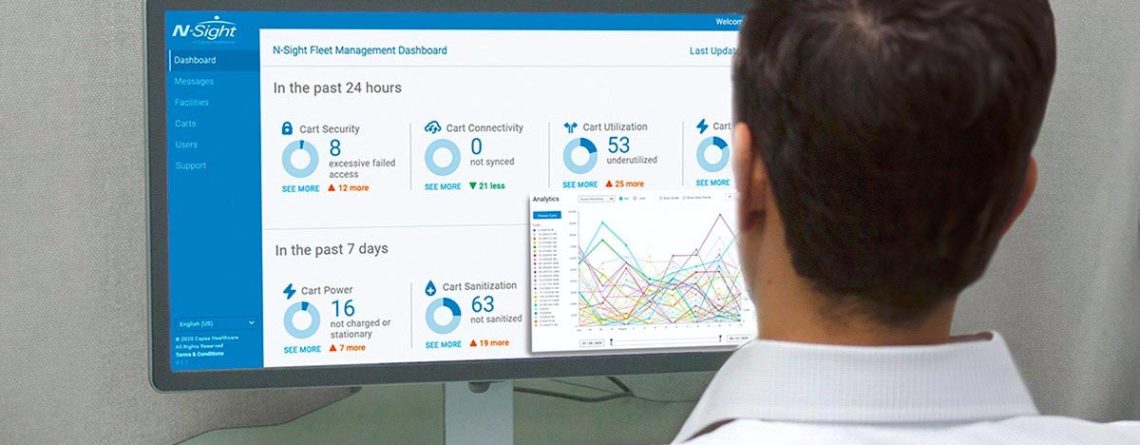
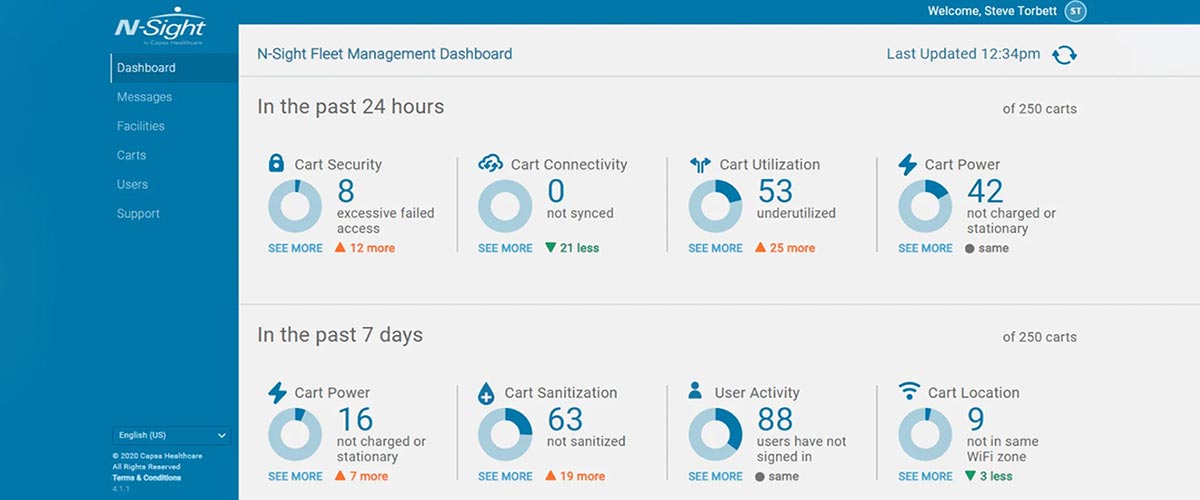
EMR Cart Fleet Management Dashboard

The Role of Fleet Management in Healthcare

Fleet management for mobile Electronic Medical Record (EMR) computer carts plays a crucial role in the healthcare field by ensuring that these essential tools are always available and well-maintained. Leveraging a designated fleet management software can quickly turn the game around, improving operational efficiency through real-time data and remote management; reducing costs through improved asset utilization and boosted productivity; and increasing the time spent on quality patient care. This article explores these roles and benefits in detail.

Optimized Asset Utilization

Effective fleet management begins with assessing whether the number of carts in a unit or facility meets current clinical demands. When your hospital system has fleet management software, cart fleet utilization reports makes this easy. Utilization reports & power analytics identify opportunities to redeploy carts to locations with greater needs, reducing the need to purchase more. These easy-to-read dashboards can be exported for review and distribution across service and support teams in just a few clicks.

Cost control is another critical aspect, as maintaining a fleet of mobile EMR workstations can be costly. Fleet management helps control these expenses by optimizing the use of each unit, scheduling preventive maintenance to prolong your cart investment, and reducing time spent on administrative and technical tasks. For example, Baptist Health System conducted a pilot study to monitor the usage of their mobile workstations. By analyzing real-time data, they optimized the deployment of their workstations, reducing the number of underutilized units and lowering operational costs. This data-driven approach ensured efficient resource use, enhancing overall operational efficiency.

IT Ticket Management

Managing a fleet of mobile EMR workstations involves regular maintenance, reducing downtime, and troubleshooting. When clinicians and cart users can enter service requests directly into the cart interface and send to the IT Helpdesk, cart maintenance becomes easier. With real-time locating systems pinpointing what and where the problem lays, this mode of fleet management minimizes downtime, translating to more time for patient care and less time dealing with technical issues.

Fleet management software also promotes a shift from reactive to preventive maintenance. By leveraging historical data, real-time monitoring, and proactive alerts, healthcare facilities can identify potential issues before they impact workstation performance. This approach not only extends the lifespan of the equipment but also ensures uninterrupted availability, a frequent issue that halts productivity and interrupts patient care.

EMR Cart RTLS Fleet Management Dashboard

Remote Fleet & User Management

Remote management capabilities of fleet management software allow healthcare facilities to update user IDs, PIN codes, user permissions, monitor cart access, and name units and floors to locate displaced carts easily using wireless access points. In addition, monitoring fleet status, connectivity, utilization levels, battery performance, and more from a centralized location ensures that mobile EMR workstations are always available and in optimal working condition.

Altus Remote Fleet Management

Fleet Management at Convergint- Innovative Medical

Fleet management for mobile EMR carts is required in healthcare, and having a software directly integrated into each cart with remote management has a multitude of benefits. Providing a structured approach to asset utilization, IT ticket management, and remote fleet management optimizes operational efficiency, reduces costs, improves clinician & IT productivity, and ultimately enhances patient care. The integration of real-time data and proactive maintenance ensures that resources are used efficiently, supporting the delivery of high-quality healthcare services.

Contact Convergint-Innovative Medical today to explore our workstations with Fleet Management software and how they’ll improve your organization’s efficiency.

Nurse Clinician Safety Labor & Delivery (OB) Carts

Part II: Nurse & Clinician Safety: Labor & Delivery (OB) Carts

Clinicians’ health and safety have become a priority to healthcare facilities. As stated in previous blogs, preventing back injuries and muscle strain for nurses & clinicians is necessary to ensure not only the proper care of patients, but to also prevent loss of staff hours to illness. Before purchasing new carts to replace your old wood furniture, ensure you’re making an informed decision to protect your staff.

As a value-added reseller of labor & delivery (OB) carts and other patient care furniture, we work directly with the user of the carts in order to design the best cart to match their workflow. Saving the hospital time and money for over 30 years, here’s a little bit of what we’ve learned:

5 Key Features for OB Furniture Carts in Healthcare

1.) Ergonomic Height & Customizability

Fetal Monitor Carts, Baby Bassinets, Overbed Tables and Delivery Carts all can be configured to meet the height needs of your clinical staff.

We recognize the importance of ergonomics and clinician comfort, so every cart at Convergint-Innovative Medical can be customized to meet the needs of each facility’s specific workflow, desired height, & includes the option to add accessories as desired.

2.) Storage Efficiency

Customize cart drawers, cupboards and open shelving. Add trays, drop-leaf surfaces, baskets or displays to any cart.

Pull-out trays allow for easy access to equipment, and drawer locks are available to enhance security and meet Joint Commission requirements. Drawers can help save the back by reducing the need to bend and reach into cupboards. Efficient storage solutions ensure that all necessary supplies are easily visible and accessible (including displays), improving workflow and in the end, patient satisfaction.

We offer online demonstrations to discuss storage solutions and drawer configurations, helping you decide what works best with your workflow. Keep necessary equipment at your fingertips to minimize clinicians time searching for what they need.

“By investing in furniture with height-adjustability, flexible storage, ergonomic typing surfaces, high-quality casters, and ease of cleaning, healthcare facilities can significantly reduce the risk of injuries and enhance overall workflow efficiency.”

3.) Ergonomic Typing Surfaces

Height-adjustable, swivel and tilt keyboard trays, with left/right mousing surfaces.

A +10 to -15 negative tilt keyboard tray helps maintain a neutral wrist position, reducing strain over repeated use. A mouse tray that slides out from the left or right side provides flexibility and comfort, allowing healthcare professionals to work efficiently without compromising ergonomics.

Ask us about keyboard tray options on our Fetal Monitor Carts and other Labor & Delivery furniture.

4.) Maneuverability & Caster Types

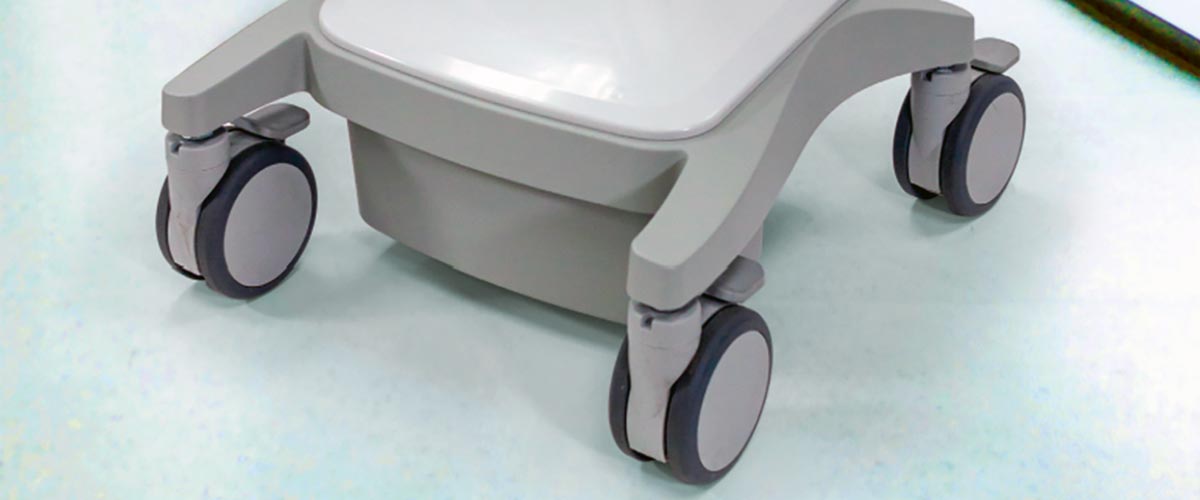
Choose carts with 5” dual wheel closed casters that are easier to push over room thresholds and elevator openings.

Larger caster sizes for your cart can reduce the push power needed, making it easier for staff to maneuver carts from room to room. Efficient maneuverability is crucial in a fast-paced healthcare environment, ensuring that medical staff can quickly and safely transport supplies and equipment.

Convergint-Innovative Medical automatically includes the best caster choice for your cart based on years of working with users first-hand.

5.) Cleanability and Infection Control

Keep your staff safe from spread of bacteria and infection- and give environmental services an easy job.

As concern grows to provide durable and cleanable surfaces that will stand the test of time, Convergint-IMS offers FDA-approved antimicrobial solid surfaces that are stain and odor resistant. With the ability to withstand harsh hospital cleaners (except for 100% bleach), no need to worry about which surfaces can only use certain disinfectants. We’re so confident in our antimicrobial surfaces, they we back it with a 10 year warranty.


OB Ergonomics at Convergint- Innovative Medical

Prioritizing customizability and ergonomic is crucial for the well-being and productivity of medical staff. By investing in furniture with height-adjustability, flexible storage, ergonomic typing surfaces, high-quality casters, and ease of cleaning, healthcare facilities can significantly reduce the risk of injuries and enhance overall workflow efficiency.

Contact Convergint-Innovative Medical today to learn more about how we can help you create a safer, more efficient work environment for your medical staff.

Nurse Clinician Safety EMR Workstation Ergonomics

Nurse & Clinician Safety: EMR Workstation Ergonomics

Preventing back injuries and muscle strain for nurses & clinicians is necessary to ensure the proper care of patients. With clinician burnout on the rise, extra steps to ensure their health and safety need to become a priority. So before deciding on the workstations they’ll use all day every day, ensure you’re making an informed decision to protect your healthcare workers.

As a value-added reseller of medical carts, computer carts, and patient care furniture who’s worked firsthand with the forefront of care for over 30 years, here’s a little bit of what we’ve learned:

5 Key Ergonomic Features for Computer Carts in Healthcare

1.)  Sit to Stand Height Adjustments

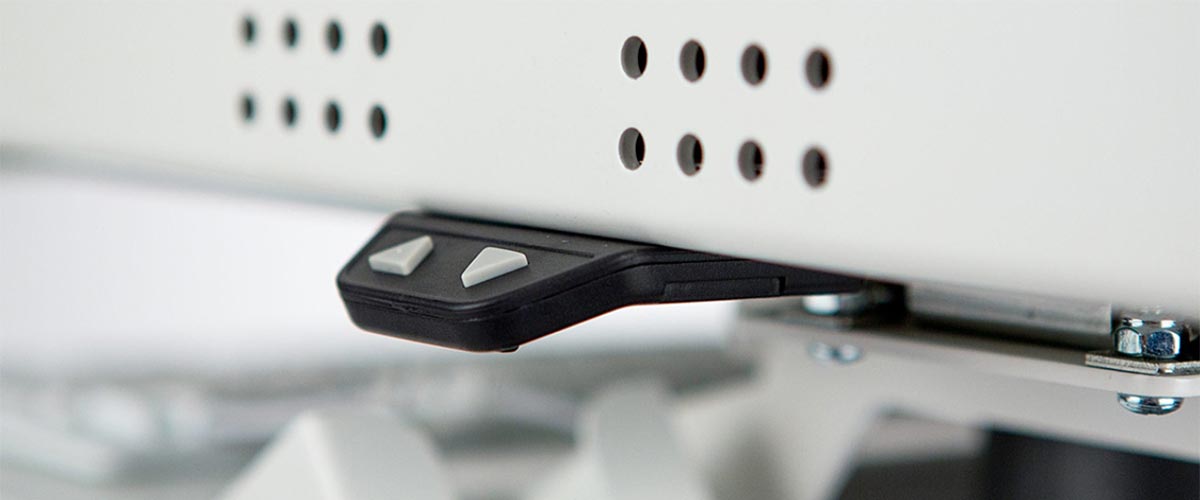
Opt for a workstation that has electronic sit-to-stand height adjustment & independent monitor height adjustment.

Manual height adjustments can be straining on staff when carts are filled with heavy supplies and technology, and the push of a button makes adjustability quicker and safer. Additionally, independent monitor height adjustment ensures the exact degree of comfort each medical staff needs to focus on their patients.

Because we recognize the importance of comfort, every workstation at Convergint- Innovative Medical includes sit-to-stand height adjustments, even our wall mounted workstations.

Nurse Clinician Safety EMR Workstations

2.)  Storage Efficiency

Stop wasting time digging for supplies with customizable trays, storage solutions, & electronic medication drawer tracking.

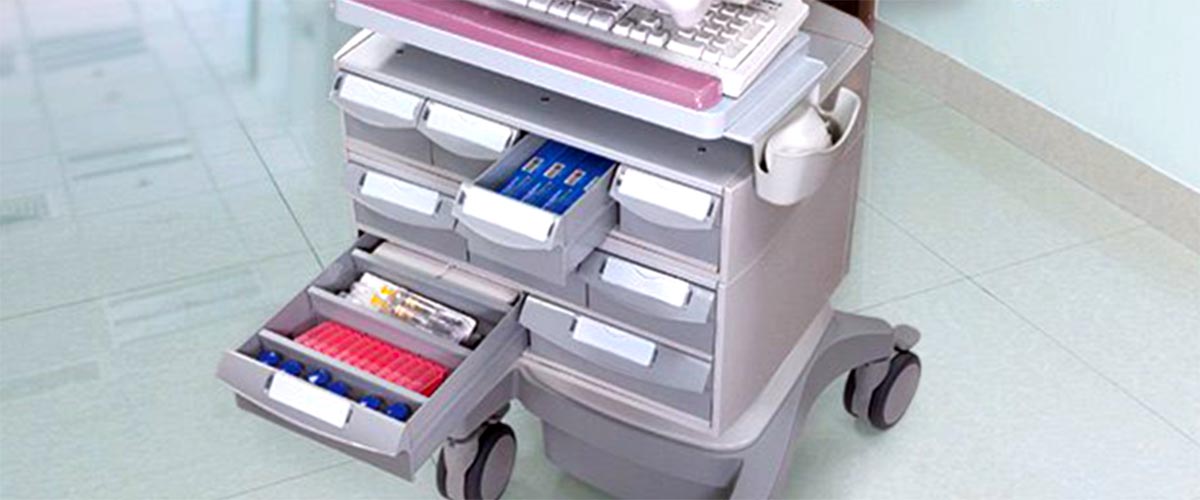
Customizable trays and drawer sizes allow for organized storage of supplies, and electronic medication drawer tracking enhances security and accuracy. Efficient storage solutions ensure that all necessary tools and medications are easily accessible, improving workflow and patient care.

With a wide range of storage solutions and bin sizes, all of our workstation drawers include customizable tray inserts for clinicians to minimize their time searching for what they need. Inquire about our patient bin tracking that minimizes mistakes in medication delivery.

Storage Workstations EMR Carts

3.)  Ergonomic Typing Surfaces

Go for carts with negative tilt keyboard trays and left/right mousing surfaces.

A 0 to -15 negative tilt keyboard tray helps maintain a neutral wrist position, reducing strain over repeated use. A mouse tray that slides out from the left or right side provides flexibility and comfort, allowing healthcare professionals to work efficiently without compromising ergonomics.

Ask us about negative tilt keyboard trays to see our most ergonomic workstations on the market.

EMR Workstation Ergonomics Medical Carts

4.)  Handle Orientation & Cushion

Proper handle orientation & cushioning reduces wrist strain from pushing and pulling by decreasing uncomfortable repetitive movements.

Ergonomically designed handles help prevent fatigue and injuries that ensure that staff can move carts comfortably and safely throughout their shifts.

From medical carts to powered and non-powered computer carts, we notice the importance of a handlebar on mobile workstations. View our selection of Workstations on Wheels to see our attention to detail.

Ergonomic Medical Carts WOWs

5.)  Maneuverability & Caster Types

Choose computer carts with 4-5” dual wheel casters that require less push force.

The right caster size for your floors and cart weight reduce the push power needed, making it easier for staff to maneuver carts from room to room. Efficient maneuverability is crucial in a fast-paced healthcare environment, ensuring that medical staff can quickly and safely transport supplies and equipment.

Convergint- Innovative Medical will automatically select the best caster choice for your mobile workstation based on years of working with users first-hand.

EMR Ergonomic Workstations Convergint

EMR Ergonomics at Convergint-Innovative Medical

Prioritizing ergonomic designs in mobile workstations is essential for the health and efficiency of medical staff. By investing in workstations with sit-to-stand height adjustments, storage efficiency, ergonomic typing surfaces, proper handles, and appropriate caster types, healthcare facilities can significantly reduce the risk of injuries from repeated use and improve overall workflow.

With so many factors to consider in your EMR Workstation on Wheels selection, contact Convergint-Innovative Medical today to learn more about how we can help you create a safer, more efficient work environment for your medical staff.

Connect with our team at (800) 968-3135 or message us here to learn more about our excellent service and solutions.

Cleanability Infection Control Durable Medical Equipment Solutions

Cleanability & Infection Control: Durable Medical Equipment Solutions

At Convergint-IMS, we understand the importance of maintaining high standards of hygiene, which is why we offer a range of products designed to withstand rigorous hospital cleaning protocols.

Preventing the spread of pathogens not only protects patients but also ensures a safe working environment for healthcare professionals. Our washable keyboards and mice, protective displays, medical-grade AIOs, antimicrobial furniture, and medical-grade equipment are essential components in any infection control strategy.

Washable Keyboards and Mice

Keyboards and mice are used daily by many users in hospitals, clinics, or medical offices, making them prime candidates for contamination. Our washable, durable, and dishwasher-proof keyboards & mice stand up to liquids, chemicals and contaminates. Perfect for hospitals, medical offices or dental clinics who are looking for value and quality and can withstand anti-microbial disinfectants. With these washable devices, you can maintain hygiene standards without compromising on functionality or durability.

Protective Displays & Medical Grade AIOs

Infection control extends to every piece of equipment in a healthcare setting, including monitors and display screens. Our sealed displays and medical-grade All-In-One displays are specifically engineered to withstand frequent cleaning with powerful hospital-grade disinfectants.

Our custom, anti-reflective, anti-glare, clear glass overlay offers washability in the hospital setting, perfect for use in the OR, on ISO carts, or other critical areas where hygiene is paramount.

“Investing in infection-resistant equipment is an investment in the safety and well-being of both patients and staff.”

Both protective displays and AIO displays are VESA Mounted for versatile use on carts, wall mounts or channel mounted applications. Available in a variety of sizes, to enhance your computing and infection-control solutions.

Antimicrobial Furniture

Furniture in healthcare facilities is a significant touchpoint and a potential vector for infection. Our antimicrobial carts & overbed tables are made with unique materials that inhibit the growth of bacteria and other harmful microorganisms. This technology provides an added layer of protection, ensuring that surfaces remain as clean and safe as possible. Ideal for patient rooms, waiting areas, and workstations, our furniture not only meets aesthetic and comfort standards but also contributes to a safer healthcare environment.

Cleanable Cart Surfaces

Investing in infection-resistant equipment is an investment in the safety and well-being of both patients and staff. At Convergint-IMS, we are committed to providing high-quality, durable solutions that meet the stringent demands of healthcare environments.


Convergint Innovative Medical Equipment & Healthcare Solutions

Contact us here to learn more about the cleanability & infection control of our product offerings, our antimicrobial furniture, washable keyboards and mice, and sealed displays. Together, we can build a safer and more hygienic future in healthcare.

Clinical Information Systems Medical Equipment Convergint

Harnessing the Power of Clinical Information Systems

In an era of rapid technological advancements, the healthcare industry is undergoing a major transformation with the integration of clinical information systems. These systems have the potential to revolutionize the way healthcare is delivered, creating better patient outcomes, and driving down costs. But what exactly are clinical information systems and how do they work?

Clinical information systems are comprehensive software platforms that enable healthcare providers to store, manage, and analyze patient data. By digitizing medical records, treatment plans, and other critical information, these systems streamline workflow processes, enhance communication among healthcare professionals, and improve patient safety. From electronic health records (EHRs) and computerized physician order entry (CPOE) systems to decision support tools and telemedicine platforms, clinical information systems enable a more efficient and seamless healthcare experience for both patients and providers.

In this article, we explore the future of healthcare and delve into the potential impact of clinical information systems on the industry. We examine key advantages, challenges, and trends shaping the adoption and implementation of these systems. Get ready to discover how clinical information systems are harnessing the power of technology to transform the way healthcare is delivered.

Key Features and Benefits of Clinical Information Systems

Clinical information systems offer a wide range of features and benefits that are transforming the healthcare landscape. One key feature is the ability to digitize and store patient records electronically. This eliminates the need for paper-based records, reducing the risk of errors and ensuring that patient information is easily accessible to healthcare providers. Electronic health records (EHRs) allow for a comprehensive view of a patient's medical history, including past diagnoses, medications, allergies, and lab results. This enables healthcare professionals to make more informed decisions and provide personalized care.

Another important feature of clinical information systems is computerized physician order entry (CPOE). This allows healthcare providers to enter medication orders and other treatment plans directly into the system, eliminating the need for handwritten prescriptions. CPOE systems have been shown to reduce medication errors and improve patient safety. They also enable healthcare providers to easily track and monitor patient progress, ensuring that treatments are effective and appropriate.

Decision support tools are another valuable component of clinical information systems. These tools use algorithms and data analytics to provide evidence-based recommendations and alerts to healthcare providers. For example, decision support tools can alert a doctor if a prescribed medication may interact negatively with a patient's existing medications or allergies. This helps healthcare providers make more informed decisions, reducing the risk of adverse events and improving patient outcomes.

Telemedicine platforms are also gaining traction in clinical information systems. These platforms allow for remote consultations and virtual visits, enabling patients to access healthcare services without the need for in-person appointments. Telemedicine has the potential to improve access to healthcare, especially for patients in remote areas or those with limited mobility. It also reduces the burden on healthcare facilities and allows for more efficient use of resources.

Overall, clinical information systems offer numerous benefits, including improved efficiency, enhanced communication, better patient outcomes, and cost savings. By digitizing and integrating patient data, these systems enable healthcare providers to deliver more personalized and effective care.

“The integration of clinical information systems has a transformative impact on healthcare delivery. By improving communication, streamlining workflows, enhancing patient safety, and driving cost savings, these systems have the potential to revolutionize the way healthcare is delivered.”

The Impact of Clinical Information Systems on Healthcare Delivery

The integration of clinical information systems has a profound impact on healthcare delivery. One of the key benefits is the improvement in communication and collaboration among healthcare professionals. With clinical information systems, healthcare providers can easily share patient information, test results, and treatment plans across different departments and care settings. This eliminates the need for manual transfer of information and reduces the risk of miscommunication or delays in care.

Furthermore, clinical information systems enable more efficient and streamlined workflow processes. With electronic health records and computerized physician order entry systems, healthcare providers can access and update patient information in real-time. This eliminates the need for paper-based records and reduces the risk of errors or lost data. It also allows for faster and more accurate diagnosis and treatment, improving patient outcomes.

Clinical information systems also have a positive impact on patient safety. By digitizing and centralizing patient data, healthcare providers can easily access critical information such as allergies, medications, and test results. This reduces the risk of medication errors, adverse drug reactions, and other preventable incidents. Decision support tools further enhance patient safety by providing evidence-based recommendations and alerts to healthcare providers.

Another significant impact of clinical information systems is the potential for cost savings. By reducing the reliance on paper-based records and streamlining workflow processes, these systems improve efficiency and productivity. This can lead to significant cost savings for healthcare facilities, as well as reduced administrative burden for healthcare providers. Additionally, clinical information systems can help identify inefficiencies and areas for improvement in healthcare delivery, enabling organizations to optimize resource allocation and reduce waste.

The integration of clinical information systems has a transformative impact on healthcare delivery. By improving communication, streamlining workflows, enhancing patient safety, and driving cost savings, these systems have the potential to revolutionize the way healthcare is delivered.

Training and Education Opportunities for Healthcare Professionals

As the healthcare industry embraces clinical information systems, it is crucial for healthcare professionals to receive the necessary training and education to effectively utilize these systems. The adoption of clinical information systems requires a shift in mindset and the development of new skills to fully leverage the potential benefits they offer.

One of the key aspects of training in clinical information systems is the understanding and utilization of electronic health records (EHRs). EHRs are digital versions of a patient's paper charts that contain their medical history, diagnoses, medications, and other important health information. Healthcare professionals need to be trained on how to navigate and input data into EHRs accurately. This includes documenting patient encounters, entering medication orders, and accessing test results. Training programs should focus on teaching healthcare professionals how to effectively use EHRs to enhance patient care, improve communication, and reduce medical errors.

Another important area of training is the use of computerized physician order entry (CPOE) systems. CPOE systems allow healthcare professionals to enter and manage patient orders electronically, replacing the traditional method of handwritten orders. This eliminates the risk of misinterpretation and transcription errors, resulting in improved patient safety. Training programs should emphasize the importance of proper utilization of CPOE systems, including order entry, order verification, and order management.

Furthermore, healthcare professionals should be trained on decision support tools integrated into clinical information systems. These tools use algorithms and data analysis to provide evidence-based recommendations for diagnosis, treatment, and patient management. Training programs should educate healthcare professionals on how to interpret and apply these recommendations to make informed decisions that align with best practices and guidelines.

In addition to technical training, healthcare professionals should also receive education on the ethical and legal aspects of clinical information systems. This includes understanding patient privacy and confidentiality, data security, and compliance with regulatory requirements. Healthcare professionals should be aware of the potential risks and challenges associated with clinical information systems and be equipped with the knowledge to mitigate them effectively.

Overall, training and education opportunities for healthcare professionals in clinical information systems are essential to ensure successful implementation and utilization of these systems. By investing in comprehensive training programs, healthcare organizations can empower their workforce to embrace technology and leverage clinical information systems to their full potential.

Convergint-IMS offers ergonomically crafted cart solutions, mobile workstations, specialized medical and supply carts, along with furniture designed with continuous clinical input to accommodate the dynamic nature of healthcare environments.


Medical Equipment & Healthcare Solutions

Connect with Convergint at (800) 968-3135 to learn more about our commitment to delivering exceptional results to our customers through unparalleled customer service.