Washable Keyboards and Mice for Healthcare
Keyboards and mice are among the most frequently touched pieces of technology in a healthcare environment. Research has found that computer peripherals used in clinical settings are frequently contaminated with microorganisms, including potential pathogens, making cleanability an important consideration when selecting equipment for patient rooms, nursing stations, medical carts, registration areas, and other shared workspaces.
Washable and waterproof keyboards and mice are designed to support frequent cleaning and disinfection while still providing the same functionality clinicians need for documentation, navigation, and everyday computer use.
The right option depends on the workstation, cleaning requirements, available space, and how the device will be used throughout the day.
1. Why Cleanable Keyboards and Mice Matter in Healthcare
Traditional office keyboards and mice get dirty, quick. They include seams, moving parts, and spaces around keys that make routine cleaning more difficult.
Washable and waterproof peripherals are designed specifically for environments where equipment needs to be cleaned and disinfected regularly. Depending on the model, they may offer sealed construction, washable housings, low-profile surfaces, or keyboard-lock functions that make cleaning easier while the device remains at the workstation.
They are commonly used in:
- Nursing stations
- Operating rooms
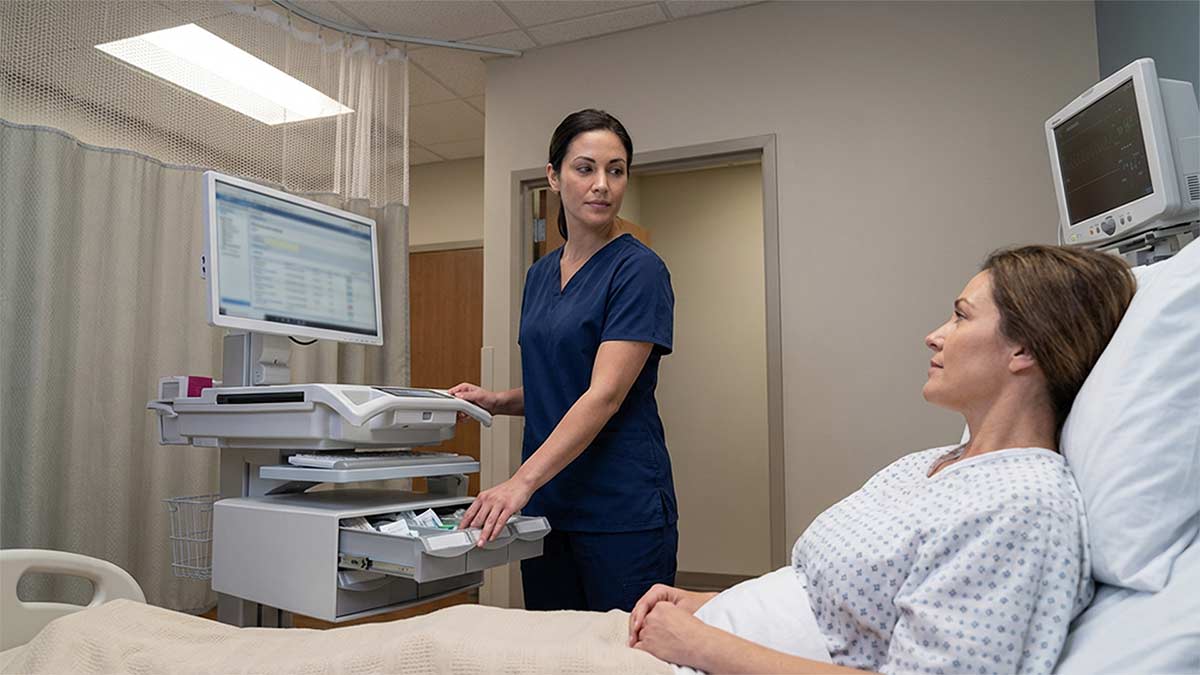
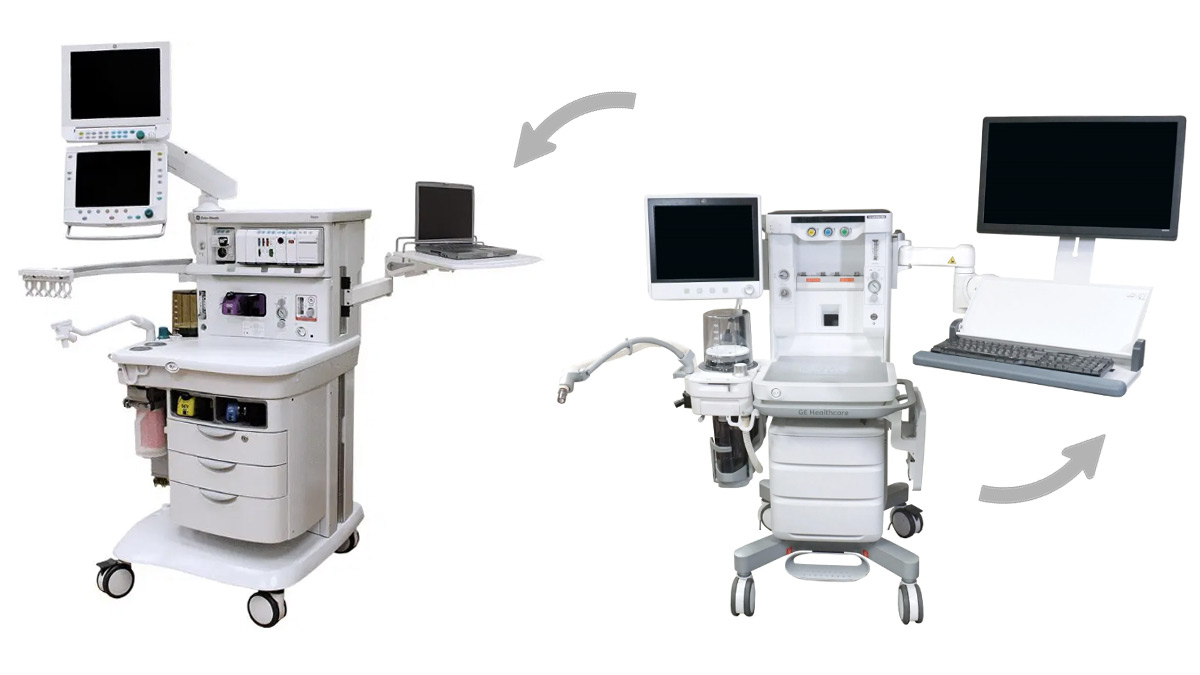
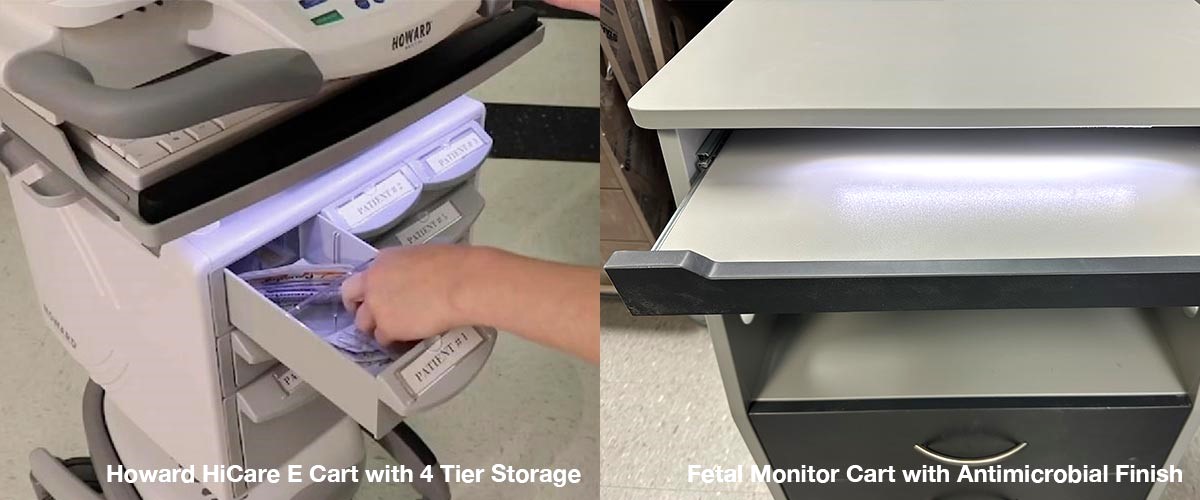
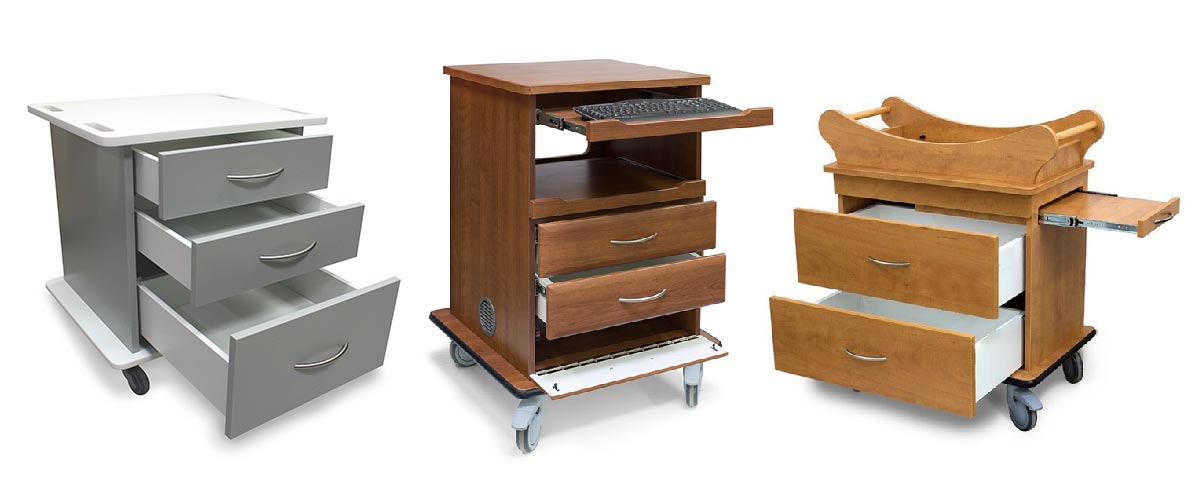
- Medical computer carts
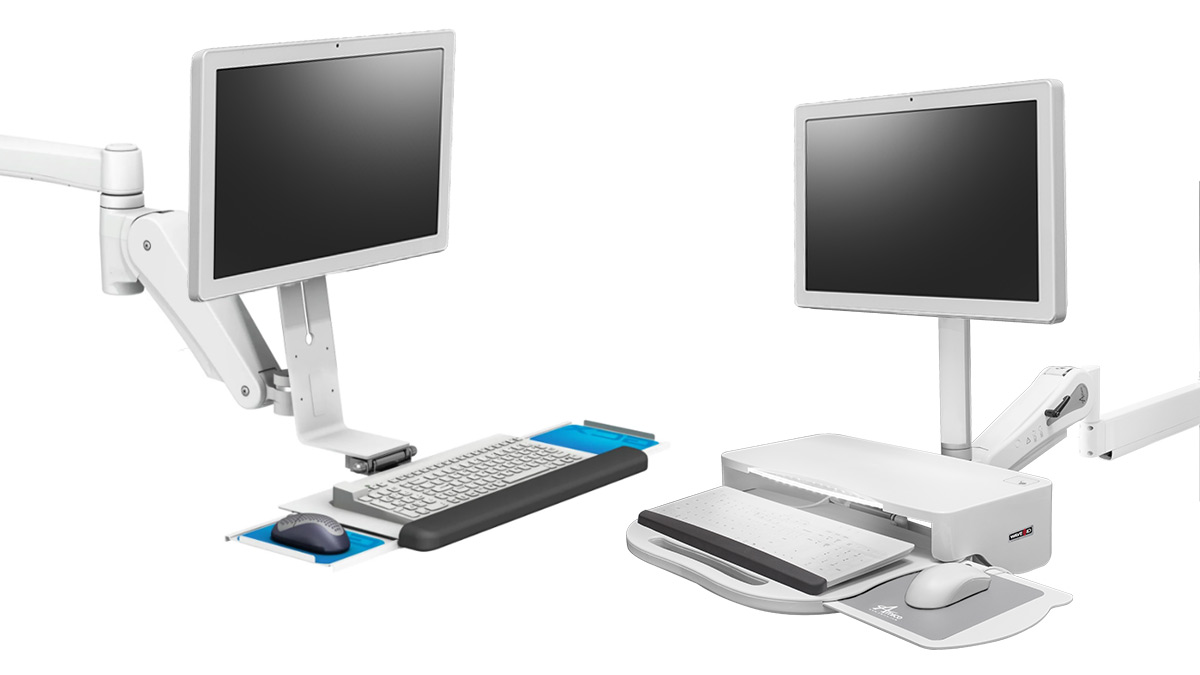
- Wall mounted workstations
- Registration desks
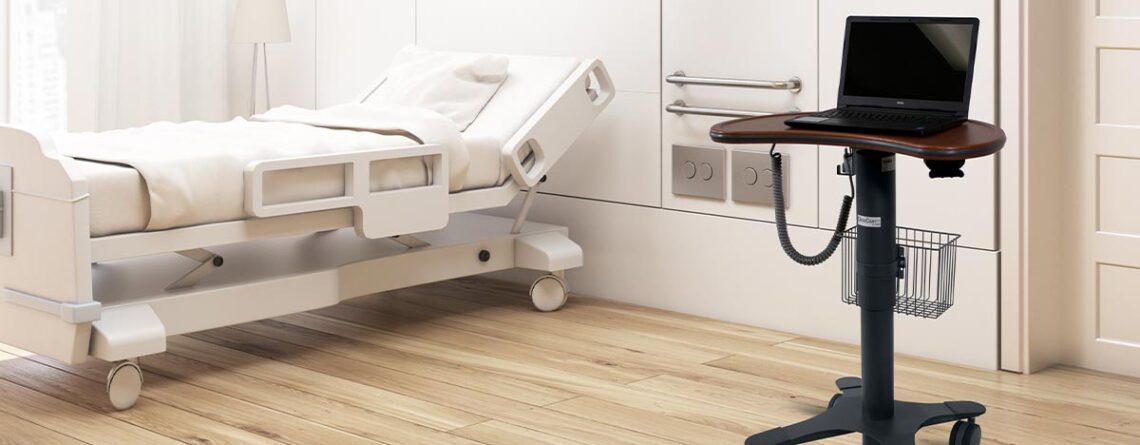
- Patient rooms
- Shared clinical workspaces
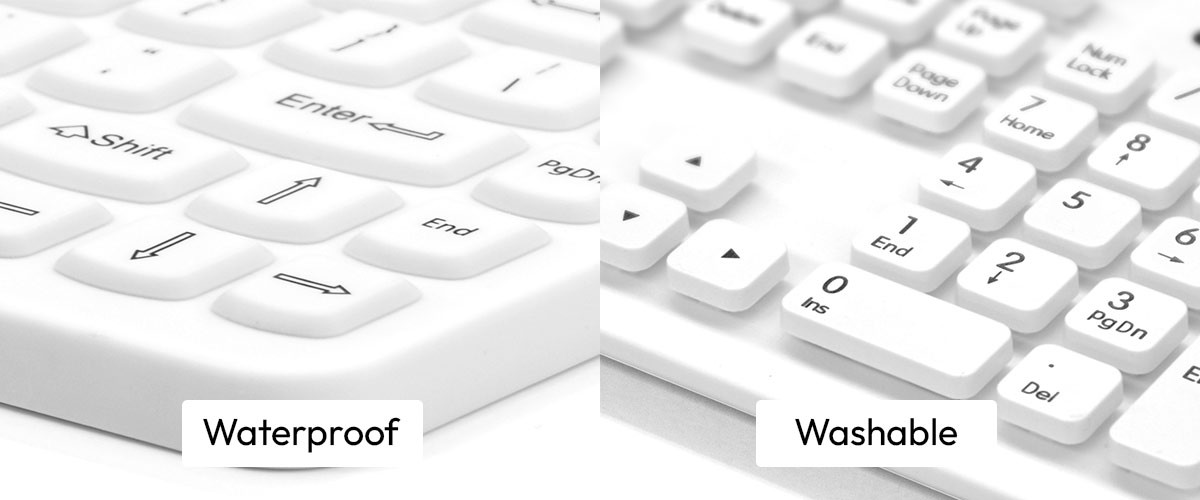
2. Washable vs. Waterproof Keyboards and Mice
Washable and waterproof peripherals are both designed for clinical use, but they offer different levels of protection and different user experiences.
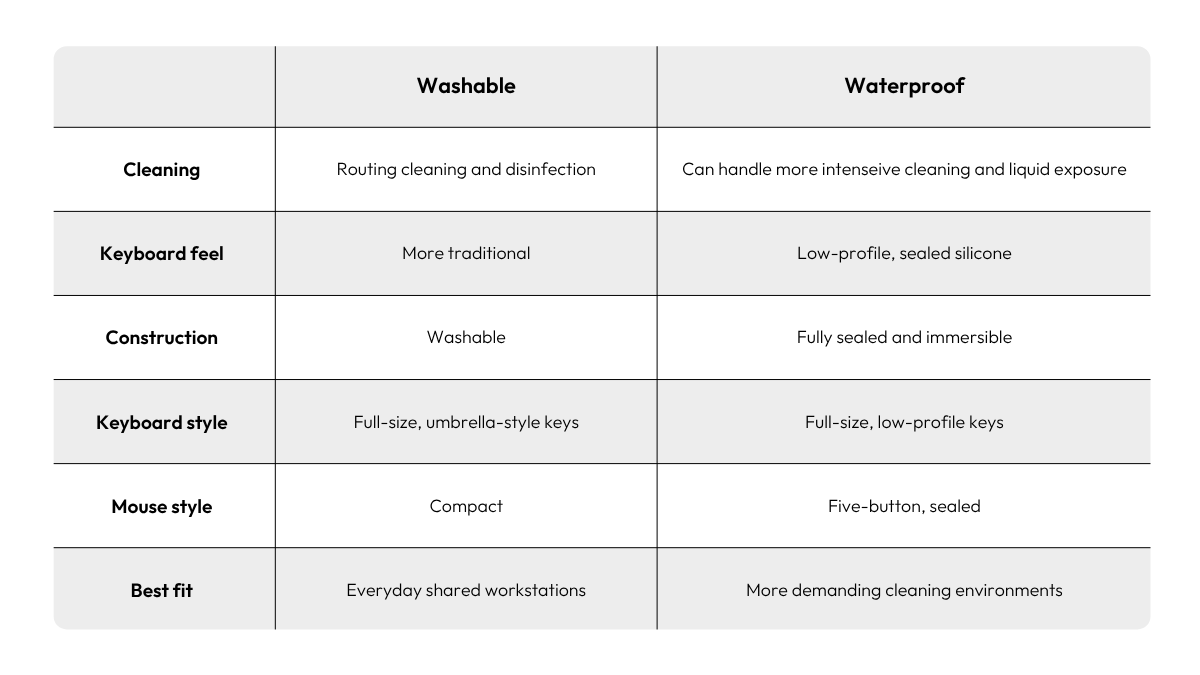
Washable Keyboards and Mice
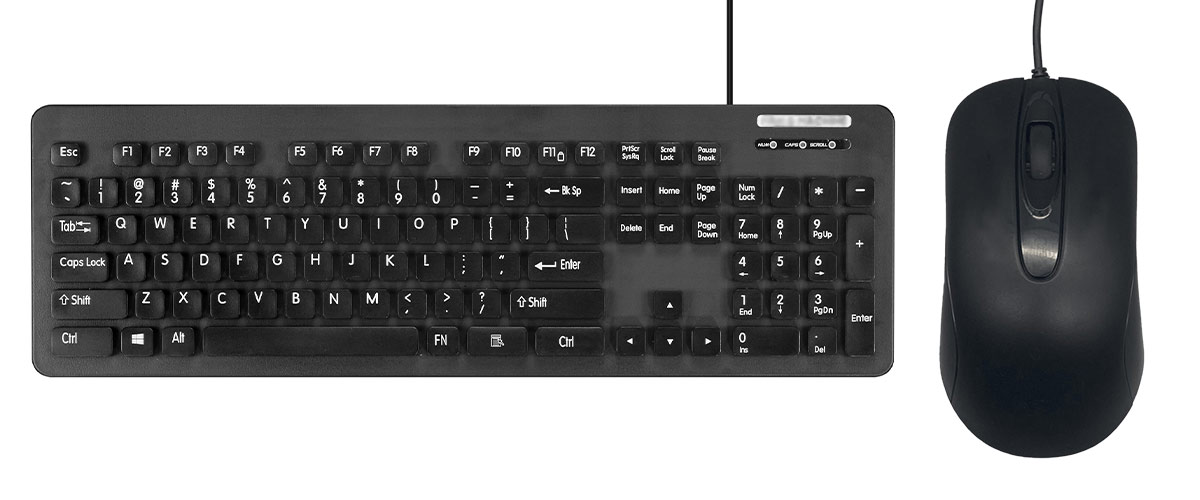
Washable models are a strong fit for everyday clinical environments where equipment needs to tolerate routine cleaning and disinfection.
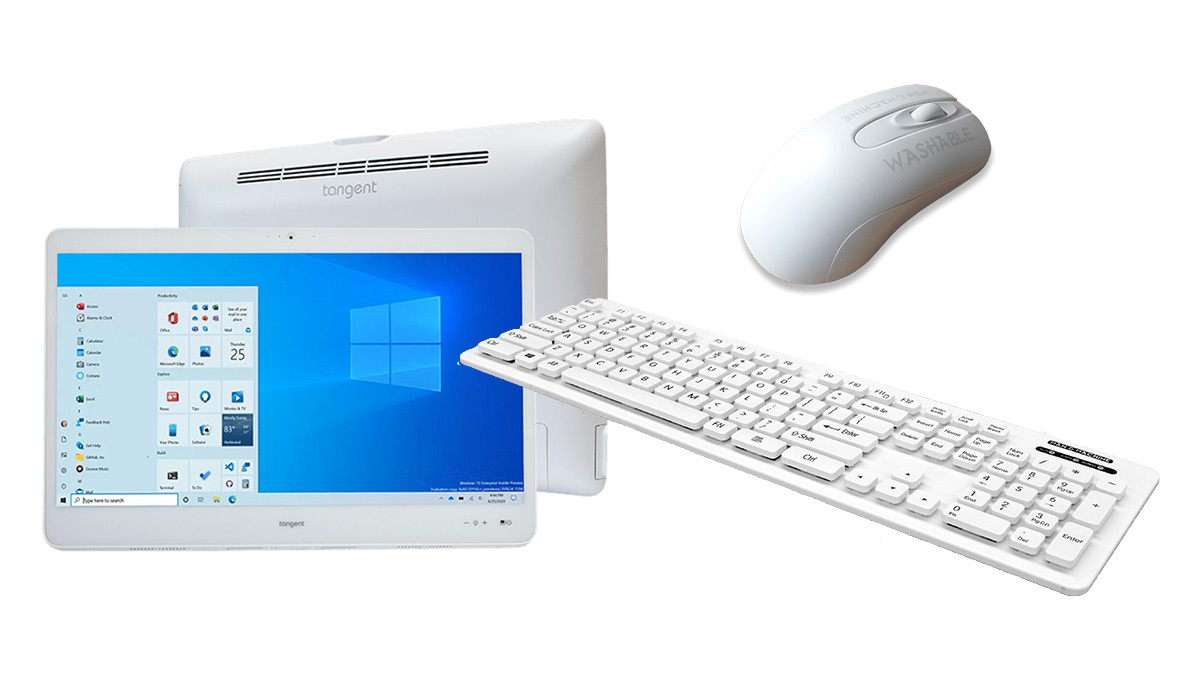
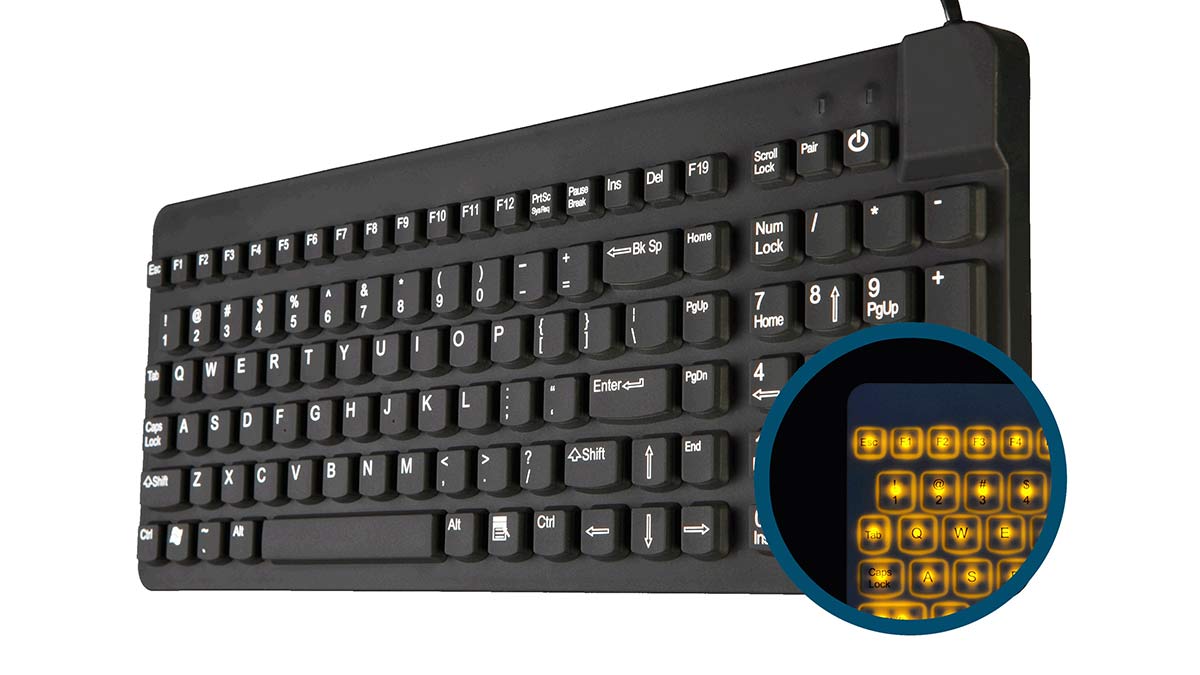
The washable keyboard provides a more traditional typing experience with a full-size or compact layout, umbrella-style keys, keyboard tilt, and IP65 washable construction. The washable mouse uses a compact IP68 design, making it a practical option for workstations where available space is limited.
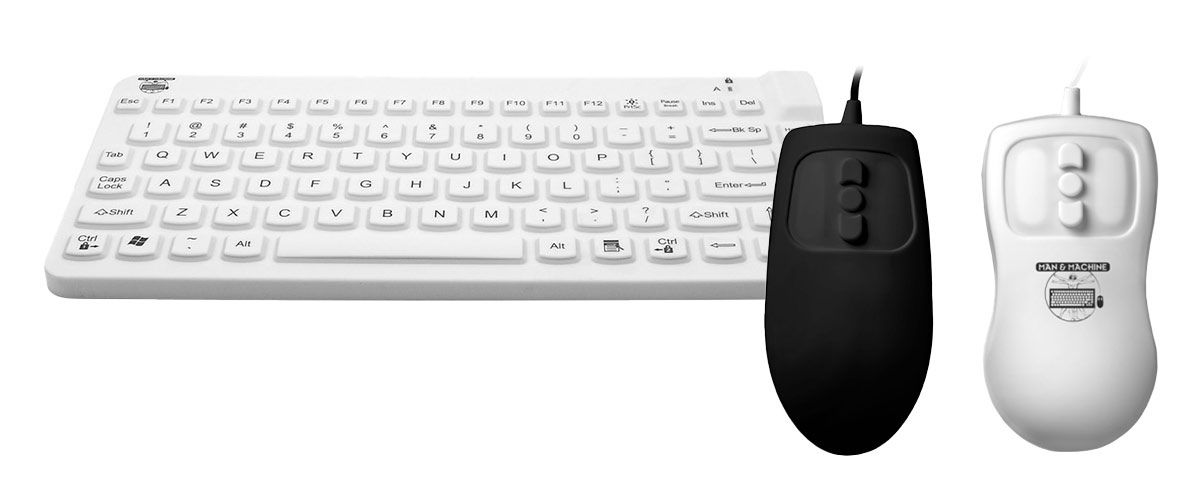
Waterproof Keyboards and Mice
Waterproof models provide a higher level of sealing for environments where liquid exposure or more intensive cleaning is a concern.
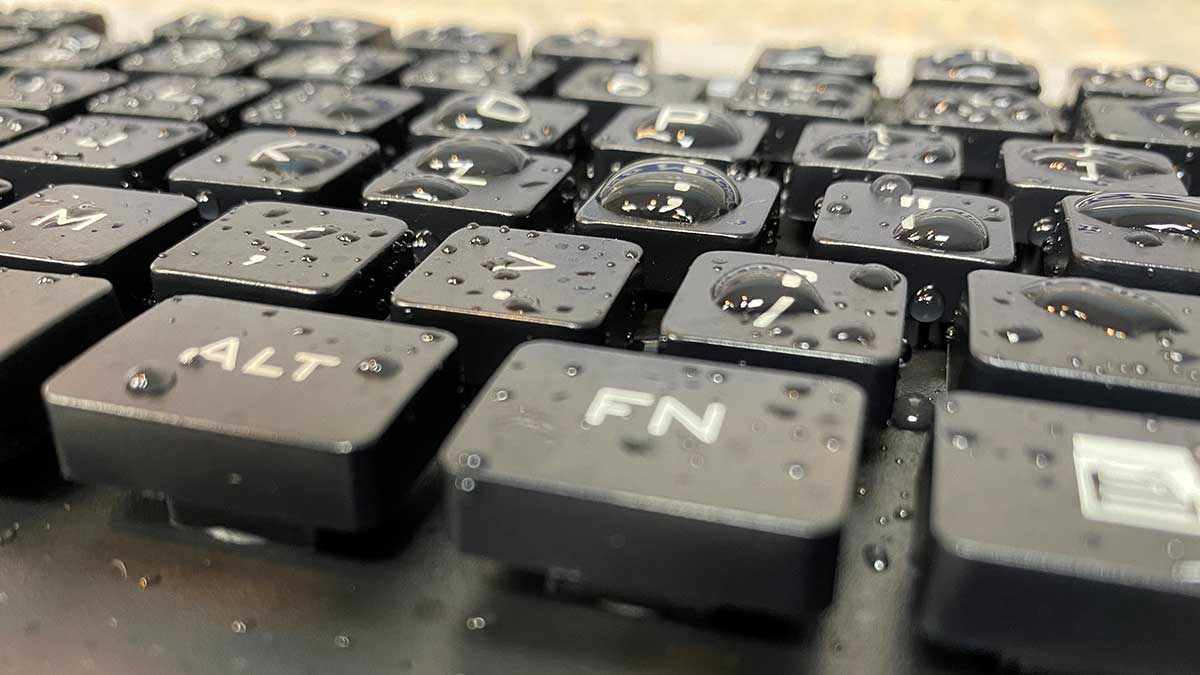
The waterproof keyboard is fully sealed, waterproof, and immersible. It uses low-profile keys and has no moving parts, creating a smooth surface for cleaning. The waterproof mouse uses the same sealed approach and includes five-button functionality.
The biggest difference between the two categories is the construction. Washable models are designed to withstand routine cleaning while maintaining a more familiar keyboard and mouse experience. Waterproof models prioritize a fully sealed, immersible design.
3. Available Keyboard and Mouse Features
Beyond the choice between washable and waterproof construction, healthcare organizations can select from a wide range of configurations based on their workstation and workflow.Available options may include:
- Full-size or compact keyboards
- Traditional umbrella-style or low-profile keys
- Wired or wireless connectivity
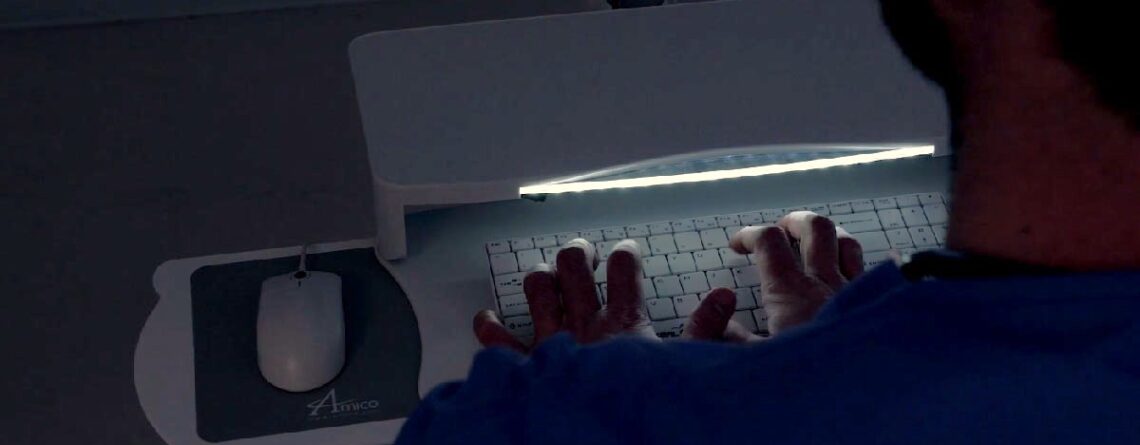
- Built-in backlighting
- MagFix magnetic mounting
- Integrated touchpads
- Keyboard tilt
- Quick-disconnect cables
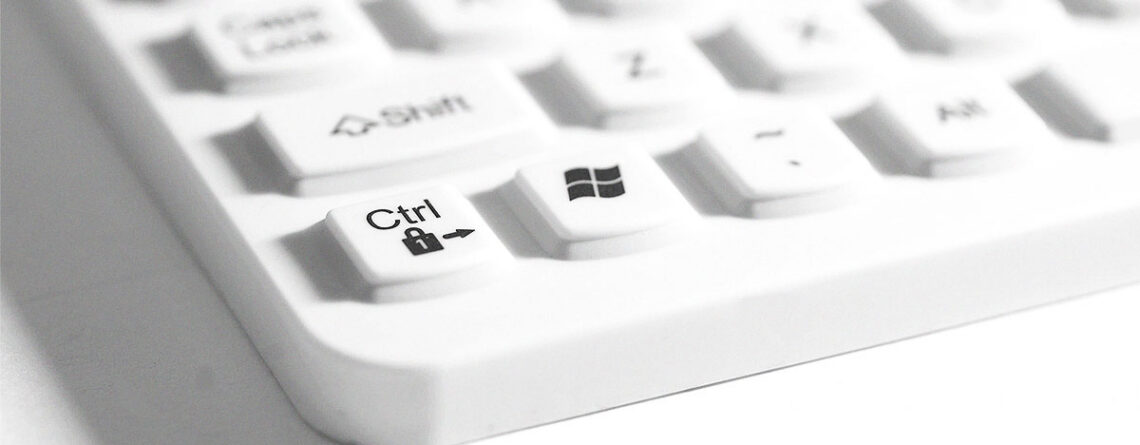
- TruLock cleaning mode
- White, black, or red finishes
- Fitted keyboard drapes
- Compact mouse designs
- Five-button mouse functionality
- IP65 or IP68 washable construction
- Fully sealed, waterproof, immersible designs
- TAA-compliant models
- Compatibility with EPA-certified disinfectants
Not every feature is available on every model, so the best configuration depends on the specific workstation and clinical application.
4. Which Features Matter for Different Workstations?
The best keyboard and mouse setup depends heavily on where the equipment will be used.
For a medical cart or workstation on wheels, compact keyboard/mouse size and secure positioning may or may not be important. Smaller peripherals can preserve added worksurface space, though many carts are configured to accommodate full-size peripherals.
At a shared nursing station, typing comfort and full-size functionality may matter more, especially for users who perform frequent documentation.
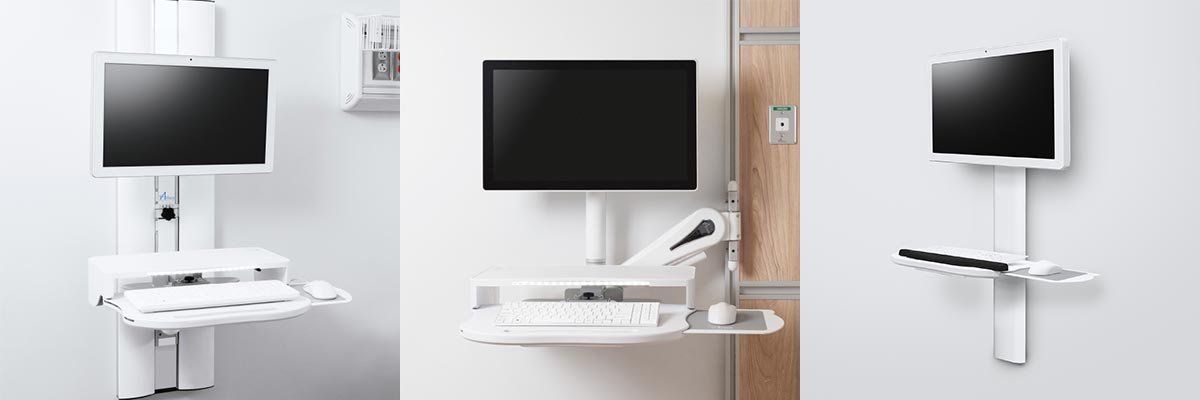
For a wall mounted workstation, space-saving configurations such as compact keyboards, integrated touchpads, or wireless options may be especially helpful. MagFix magnetic mounting can also help keep the keyboard securely in place when it is flipped up and stowed closer to the wall, helping maintain a clean, compact footprint when the workstation is not in use.
In areas with more demanding cleaning requirements, fully sealed waterproof models may be the better fit.
5. Cleaning Washable and Waterproof Keyboards and Mice
Both washable and waterproof models are designed to support routine cleaning at the workstation, but facilities should always follow the cleaning instructions for the exact model being used.
For the washable and waterproof products covered by our cleaning guides, surfaces can be wiped, brushed, or sprayed using cloths, sponges, or soft-bristle brushes. The USB connector should not be placed in fluid, and the product can be wiped dry or allowed to air dry after cleaning.
Recommended cleaning categories include:
- 1:10 bleach solution
- Alcohol-based cleaners
- Hydrogen peroxide solutions
- Quaternary ammonium cleaners
- Phenol-based cleaners
- Soap and water
We advise against petroleum-based cleaning fluids, acetone, bleach concentrations greater than 10 percent, abrasive cleaners, temperature or pressure sterilization, and scrubbing or buffing pads.
6. FAQ
Compact keyboards reduce the amount of worksurface required for documentation, leaving more room for scanners, supplies, monitors, and other clinical equipment. This can be especially useful on workstation-on-wheels setups, wall mounted workstations, and small nursing stations where usable space is limited. However, the numeric keypad to the right of the keyboard is eliminated, making number-heavy charting time consuming and less ergonomic.
The best keyboard depends on the cart, available worksurface space, cleaning requirements, and how frequently clinicians document. Compact models can help preserve workspace, while full-size models may be more comfortable for frequent typing.
Other useful considerations include washable or waterproof construction, connectivity, and whether a touchpad or backlighting would benefit the application.
Hospitals should consider cleanability, comfort, size, functionality, and how frequently the mouse will be shared and disinfected.
A compact washable mouse may work well for general shared workstations, while a fully sealed waterproof mouse may be preferred in environments with more demanding cleaning requirements.
A washable keyboard is designed to tolerate routine cleaning and disinfection while maintaining a traditional keyboard feel.
A waterproof keyboard uses fully sealed, immersible construction and low-profile keys with no moving parts, making it better suited for applications where liquid protection and more intensive cleaning are priorities.
Yes. Select washable and waterproof keyboards include TruLock functionality, which allows users to temporarily disable the keyboard while cleaning it without shutting down or disconnecting the computer.
The exact locking procedure varies by model, so users should follow the cleaning instructions provided with their specific keyboard.
Choosing the Right Keyboard and Mouse for Your Workstation
There is no single keyboard or mouse that works best for every healthcare environment.
Some facilities may prioritize a familiar typing experience and routine washability. Others may need fully sealed, immersible peripherals. Space, workstation type, cleaning protocol, and clinician preferences can all influence the right choice.
Convergint-IMS offers a variety of washable and waterproof keyboards and mice and can help you select the right configuration for your medical cart, nursing station, wall mounted workstation, or other clinical application.