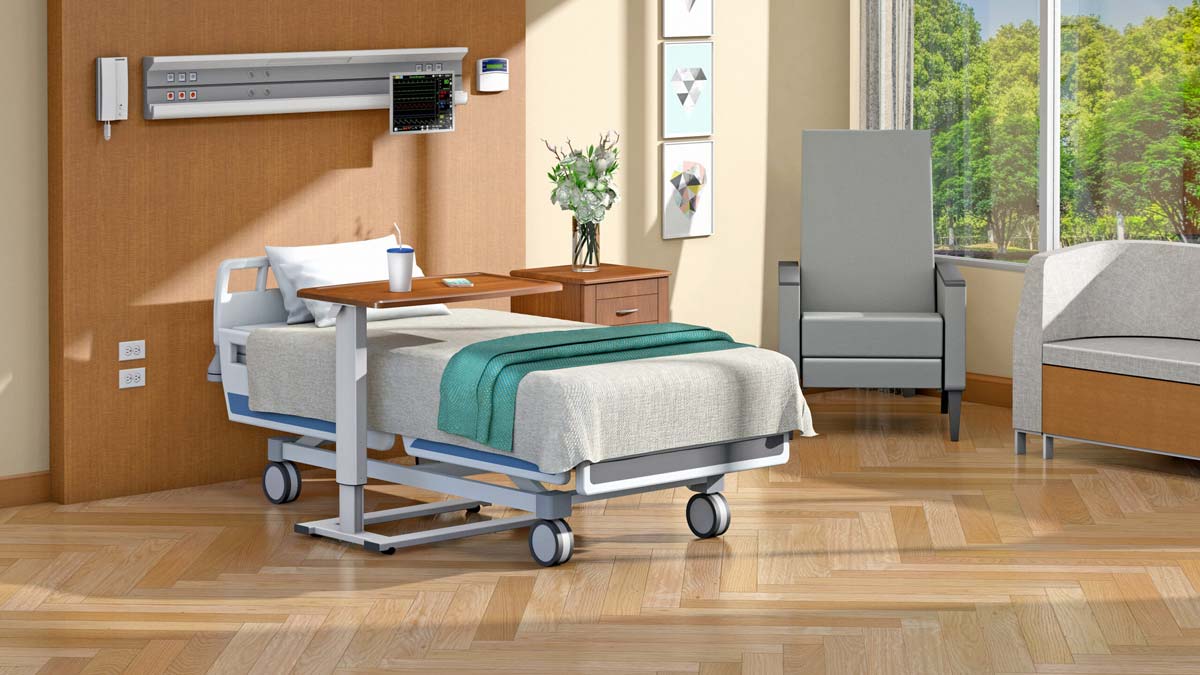
Uses of Overbed Tables in Healthcare
If you’re wondering what an overbed table is used for in a healthcare setting, the answer goes far beyond meals.
Overbed Table Medical Definition
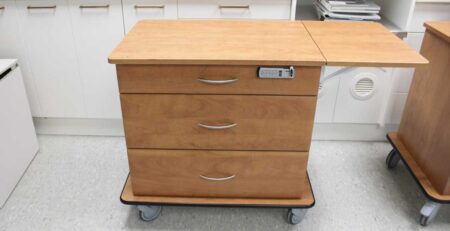
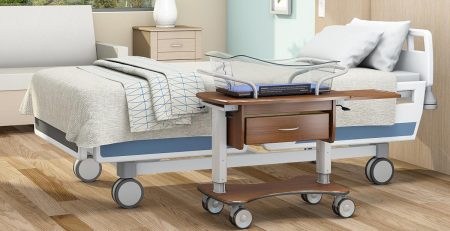
In a healthcare setting, an overbed table is an adjustable height mobile surface designed to extend over a patient’s bed. It provides a stable area for meals, personal items, and bedside care activities. Overbed tables are commonly used in hospitals, long-term care facilities, and rehabilitation environments where patients spend extended time in bed.
For clinical staff, including CNAs, nurses, and physicians, overbed tables support efficient care by keeping essential items within reach at the bedside.
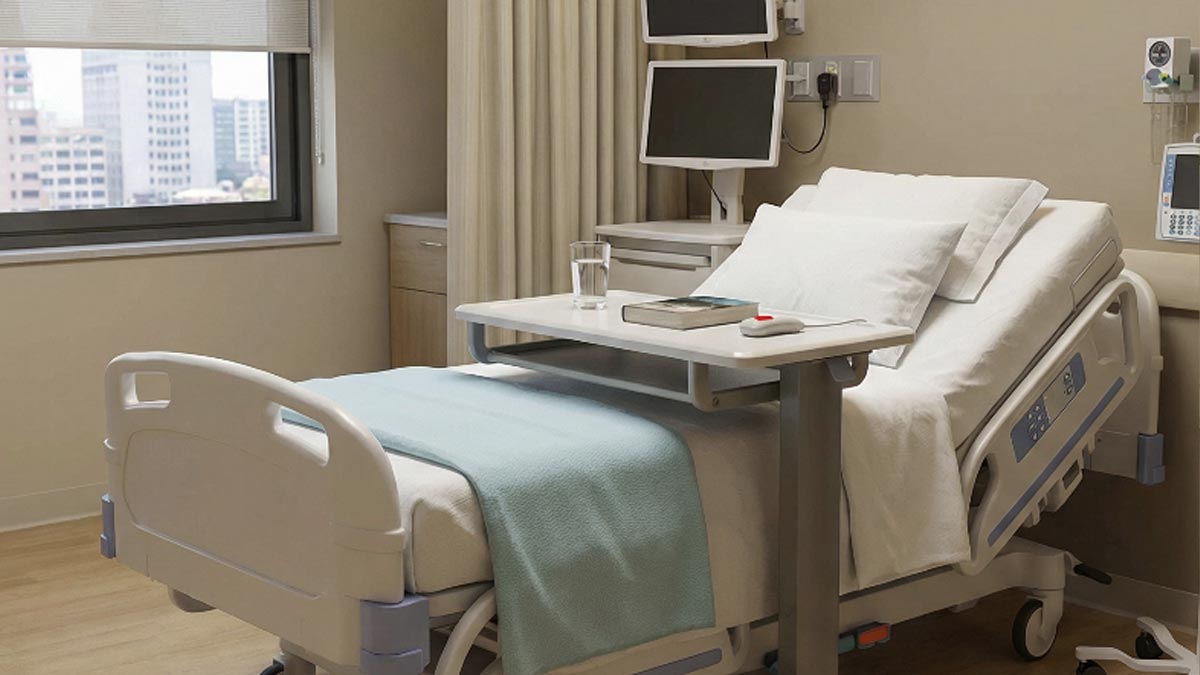
What Can an Overbed Table Be Used For?
Overbed tables are used in a variety of day-to-day patient care and clinical scenarios.
Common Use Cases
- Meal support: Provides a stable surface for eating and drinking in bed.
- Personal item storage: Holds phones, books, hygiene items, and other belongings within reach.
- Patient activities: Supports reading, writing, or device use during recovery
- Technology workstation: Used for patient education or telehealth via tablets or laptops.
- Bedside care tasks: Used by CNAs and nurses during feeding, hygiene assistance, and routine care.
- Medication placement: Temporary surface for medications and small clinical supplies.
- Documentation support: Holds charts, tablets, or paperwork during bedside interactions.
- Rehabilitation support: Used for light therapy exercises or assisted activities in rehab settings.
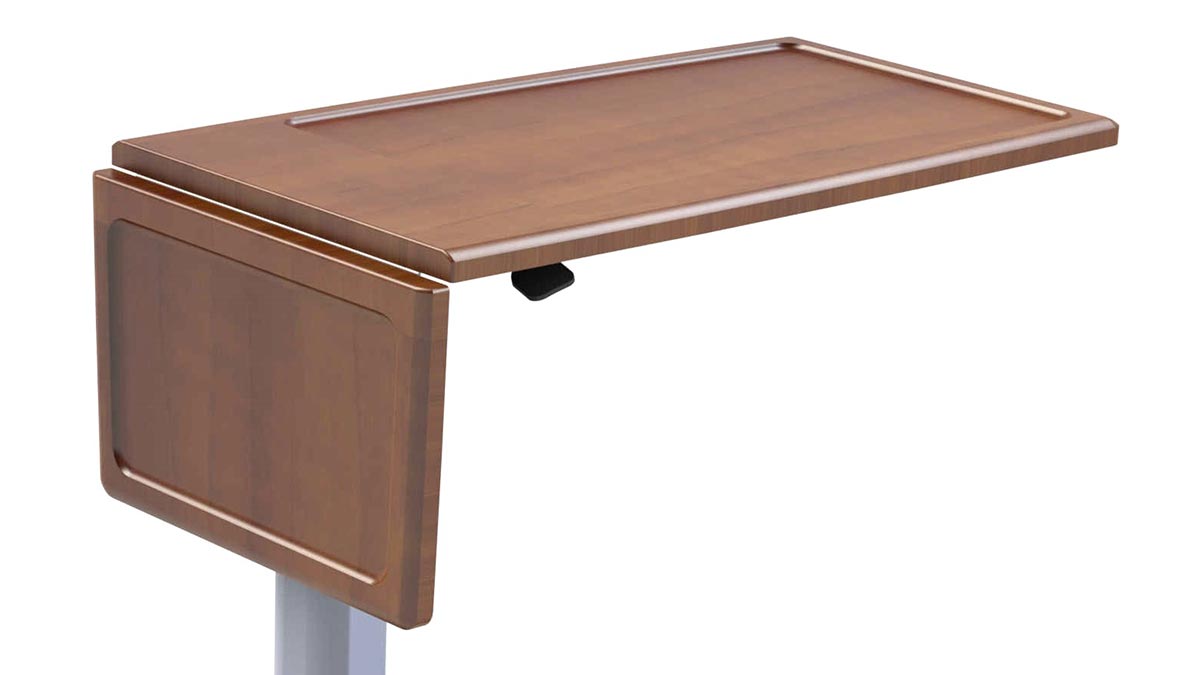
Benefits of Medical Overbed Tables
In addition to their practical uses, overbed tables contribute to both patient comfort and caregiver efficiency.
- Improved accessibility: Keeps essential items within reach for patients and staff.
- Enhanced patient comfort: Creates a functional personal space for meals and activities.
- Increased efficiency for CNAs and nurses: Reduces unnecessary movement during routine care.
- Supports infection control: Easy-to-clean antimicrobial surfaces help maintain a hygienic environment.
- Stability and durability: Built to withstand the 24/7/365 demands of healthcare while providing a steady surface for patient and clinical needs.
- Consistent room design: Finish options can match other patient room furniture for a cohesive look.
What to Consider When Choosing Overbed Tables
When evaluating overbed tables for a healthcare environment, several practical factors should be considered:
- Adjustable height for patient and caregiver comfort
- Durable, easy-to-clean surfaces for infection control
- Stable base design that fits different bed types
- Smooth-rolling wheels for easy repositioning within the room
- Finish options that match other patient room furniture
- Flexible configurations to meet different clinical needs
Explore Overbed Tables from Convergint-IMS
If you are evaluating options for your facility, reviewing medical overbed table options can help you better understand how different features support patient care and daily workflows.